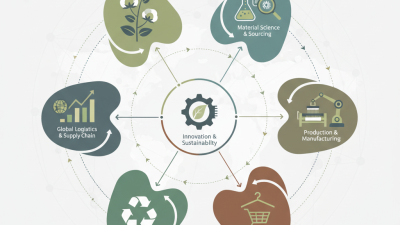
What Is the Textile Manufacturing Process in China?
China’s textile manufacturing process is a connected chain, not a single factory operation. It can begin with cotton bales or polyester chips and end with a checked, packed garment. Between them, materials are prepared, spun into yarn, woven or knitted into fabric, dyed, finished, cut, and sewn. Details vary by product. A cotton T-shirt and a technical fabric follow different routes.
The scale is substantial. The China National Textile and Apparel Council reported that China’s textile and apparel exports totaled about US$293.6 billion in 2023, based on customs data. That figure shows the sector’s global reach, but it does not describe every production line. The textile industry process also depends on fiber choice, machinery, order size, and quality requirements. In a typical mill, operators monitor yarn tension, fabric density, dye-bath temperature, and color consistency. Small changes can affect an entire batch.
This guide follows the process from raw materials to finished products, explaining where inspections and production decisions matter. It also considers how water, energy, and material waste shape modern manufacturing. Industry figures offer useful context, yet reporting methods and product categories can differ. That limitation deserves attention. A polished factory tour may show clean machines and neat fabric rolls, while leaving out rework, delays, or supplier coordination. Understanding those less visible steps gives buyers and readers a more realistic picture of textile production in China.
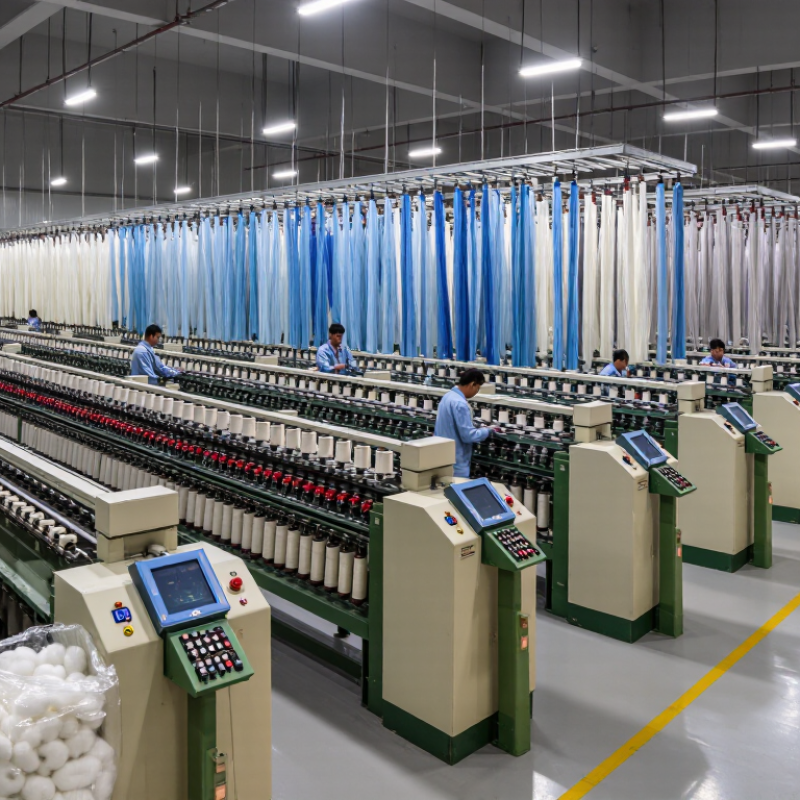
Raw Material Sourcing and Fiber Preparation in China
Raw-material sourcing in China depends on the intended fabric, order size, and delivery schedule. Cotton may come from domestic growing regions or imported supply chains, while polyester and other man-made fibers are purchased from specialized producers. Buyers check fiber specifications, moisture levels, color, and contamination risks before accepting a shipment. Paperwork matters, but it cannot replace inspection.
Small differences matter. A few damp or stained cotton bales can affect yarn quality later. At the mill, workers take samples and test staple length, strength, and cleanliness. For synthetic fibers, they may check filament consistency and packaging condition. Suppliers can vary, even within one sourcing region, so mills often compare batches rather than assuming every delivery will perform alike.
Preparation starts with opening compressed bales and removing loose debris. Fibers are then blended to create a more even mix, especially when several lots are used. Carding separates and aligns fibers; combing may remove shorter cotton fibers for finer yarns. Drawing evens out the strands before spinning. This sequence is practical, not perfect: overly aggressive processing can damage fibers, while weak preparation leaves unevenness for later stages. Careful settings and repeated checks help operators catch problems before the fiber becomes yarn.
Turning Fibers into Yarn
After fibers are prepared, spinning mills turn loose material into yarn through a sequence of controlled steps. Cotton may be opened and cleaned to remove seed fragments, dust, and tangled clumps. At the carding machine, fine wire teeth separate fibers and form a soft, continuous web. Small knots matter. Uneven fiber lengths can later create weak spots or a rough surface.
Several carded strands are drawn together to even out their thickness. Some yarns are combed as well, removing shorter fibers for a smoother, more consistent result. Not every product needs this extra step. The prepared fibers are then twisted into a thin roving before spinning. Ring spinning adds twist with a moving spindle; rotor and other systems suit different yarn needs and production conditions. China’s mills use varied equipment, so the exact route depends on fiber type, yarn count, and the fabric’s intended use.
In practice, the line is less tidy than a diagram suggests. Humidity, machine settings, and raw-fiber variation can change how fibers behave. Operators check yarn samples for thickness, strength, and visible imperfections, sometimes adjusting tension or speed. A sample may look smooth under bright inspection lights yet feel slightly uneven between the fingers. That gap is worth noticing, because a small inconsistency can show up more clearly once the yarn is woven or knitted.
What Is the Textile Manufacturing Process in China? — Turning Fibers into Yarn
Typical staple-fiber length ranges used in spinning. Fiber is opened, cleaned, and aligned before being twisted into yarn; actual lengths vary by grade and supplier.
Longer fibers can generally be spun into finer yarns, while fiber properties and the spinning method also affect yarn quality.
Making Fabric Through Weaving or Knitting
In China, fabric formation usually begins after fibers have been spun into yarn and checked for thickness and strength. Weaving interlaces two yarn systems: lengthwise warp threads are held under tension, while the loom carries crosswise weft through them. The result can feel crisp and stable, like a tightly woven cotton shirt fabric. Knitting instead forms connected loops, using one or more yarns. Its stretch and softer drape suit T-shirts and many lightweight fabrics. Small changes in yarn tension matter. A tiny fault can run across a whole roll.
China’s National Bureau of Statistics reported that above-designated-size enterprises produced about 47.5 billion meters of cloth in 2023. The figure covers broad cloth output, not a clean split between woven and knitted fabric, so it should not be read as a measure of either method alone. At the wider supply-chain level, Textile Exchange’s Materials Market Report 2024 estimated global fiber production at 124 million tonnes in 2023. That scale helps explain why mills monitor speed, yarn breaks, and fabric defects closely. Machines can run fast. Inspection still needs human judgment. A subtle flaw may be missed under harsh lighting, and that is worth admitting. Finishing and quality checks then adjust the fabric’s hand, width, and stability before it is cut.
What Is the Textile Manufacturing Process in China? - Making Fabric Through Weaving or Knitting
| Process Dimension | Woven Fabric | Knitted Fabric |
|---|---|---|
| 1. Fiber and yarn preparation | Fibers are spun into yarn, or purchased as yarn. Yarn may be wound, cleaned, and checked for count, strength, and visible defects before weaving. | Fibers are spun into yarn, or purchased as yarn. Yarn is wound into packages suitable for feeding smoothly to knitting needles. |
| 2. Preparation before fabric formation | Warp yarns are arranged in order and commonly sized to help reduce breakage during weaving. Weft yarn is prepared separately for insertion across the fabric width. | Yarn packages are creel-mounted and threaded through feeders and tension-control devices. Warp knitting also requires yarns to be prepared on beams. |
| 3. Fabric-forming method | On a loom, lengthwise warp yarns interlace with crosswise weft yarns. Common basic structures include plain, twill, and satin weaves. | Needles form interconnected loops from one or more yarns. The two main categories are weft knitting and warp knitting. |
| 4. Typical machinery | Common equipment includes warping and sizing machines, followed by shuttle, rapier, projectile, or air-jet looms. | Common equipment includes circular weft-knitting machines, flat knitting machines, and warp-knitting machines such as tricot or raschel machines. |
| 5. Fabric construction and behavior | Woven fabrics are generally stable in length and width. Their stretch depends on yarn elasticity, weave, and any added elastomeric yarn. | Knitted fabrics are formed from loops and are often more extensible and flexible. Stretch and recovery depend on the knit structure and yarn composition. |
| 6. Typical applications | Common uses include shirts, trousers, denim, bed linen, curtains, workwear, and many types of outerwear. | Common uses include T-shirts, underwear, hosiery, sweaters, sportswear, and stretch or seamless garments. |
| 7. Fabric inspection | Checks may cover width, fabric length, yarn or weaving defects, color consistency, and dimensional stability. | Checks may cover width, loop or needle defects, holes, spirality, surface appearance, stretch, and dimensional stability. |
| 8. Dyeing and finishing | Depending on the fiber and product, fabric may be scoured, bleached, dyed or printed, then finished by processes such as heat setting, softening, or calendaring. | Depending on the fiber and product, fabric may be scoured, bleached, dyed or printed, then finished by processes such as compacting, heat setting, or softening. |
| 9. Cutting and garment production | Finished fabric is inspected and may be relaxed before spreading, cutting, sewing, and final garment inspection. | Finished fabric or knitted panels are inspected before cutting and sewing; some knitted garments can also be made from shaped panels or seamless construction. |
| Key process distinction | Fabric is made by interlacing two yarn systems: warp and weft. | Fabric is made by forming and connecting yarn loops with needles. |
Actual process routes vary according to fiber type, yarn specification, fabric construction, equipment, and end-use requirements.
Dyeing, Printing, and Finishing Textiles
Dyeing, printing, and finishing determine how a textile looks, feels, and performs. In Chinese mills, work typically begins with inspecting greige fabric for stains, uneven construction, or weaving defects. The material is scoured and washed so oils and residues do not interfere with color. Fiber content matters: cotton, polyester, and blends often need different dyes, temperatures, and processing times. A small lab sample helps technicians adjust the recipe before a full production run. Color matching takes care.
Printing adds patterns through screen, rotary, or digital methods. Each has trade-offs. Screens can suit larger runs, while digital printing allows detailed artwork with less setup. Technicians check registration, color strength, and whether the print remains clear after washing. Finishing may include softening, heat-setting, or controlled shrinking to achieve the requested hand feel and dimensions.
Simple checks matter.
Inspectors can compare shade under standard lighting and test shrinkage, rubbing fastness, and surface feel. Water and chemical management also deserve attention during wet processing; a bright sample alone does not prove a responsible process. Results can vary between fabric batches, and rushing corrections may create new defects. Even careful sampling cannot perfectly predict every bulk-production outcome, so records and repeat checks remain important.
Inspecting and Preparing Textiles for Market
Before a textile shipment reaches the market, inspectors check its appearance, measurements, and performance against the buyer’s approved sample. Under bright, even lighting, they look for broken yarns, oil spots, uneven dyeing, loose threads, and weaving lines. Small marks matter. A flaw that seems minor on a worktable may stand out across a finished garment. Inspectors also compare fabric width and weight with the order specifications, since small variations can affect cutting and sewing.
Testing adds evidence beyond visual checks. A sample may be washed to assess shrinkage and color transfer, or rubbed to see whether the surface sheds fibers. Results should be recorded with the fabric lot and test conditions, so teams can trace a concern to its source. Keep records. Sampling has limits: a passing swatch cannot prove every meter is consistent, and visual grading involves judgment. Two inspectors may disagree about a faint shade difference. When results are uncertain, checking more rolls is wiser than assuming the first sample represents the whole batch. After inspection, textiles are folded or rolled carefully, labeled with composition and care details, and packed to reduce moisture, creasing, and handling damage.
Related Posts
-
How to Understand the Textile Industry Process in 2026?
-
Top Trends in the Textile Industry You Should Know?
-
What Is the Textile Industry and How Does It Work?
-

China Top Textile Industry Manufacturers for Global Buyers?
-
How to Navigate the Textile Industry Process for Global Sourcing?
-
Top Textile Tips for Home Decor and Global Sourcing Advice?