China Top 10 Group Textile Manufacturers for Global Buyers?

China remains a central force in global textile sourcing. WTO trade statistics consistently identify China as the world’s largest exporter of textiles and clothing. Its strength covers spinning, weaving, knitting, dyeing, finishing, and technical fabrics. However, scale alone does not prove reliability. A modern factory may produce millions of meters monthly, yet still struggle with shade consistency or delivery pressure.

This guide introduces ten leading Chinese group textile manufacturers for global buyers. The selection considers production capacity, export experience, certifications, vertical integration, product range, and environmental reporting. These factors matter when a buyer compares cotton jersey, recycled polyester, home textiles, or industrial fabric. Textile Exchange’s Materials Market Report 2024 reported that polyester represented about 57% of global fiber production in 2023. That figure shows why synthetic-fiber expertise and recycled-content verification deserve close attention.

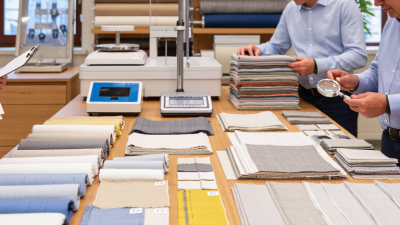
Look beyond a polished showroom. Request recent audit records, test reports, production photographs, and references from comparable markets. Check whether the supplier controls weaving and dyeing internally or relies heavily on subcontractors. A reliable group textile partner should explain minimum order quantities, lead times, color approval procedures, and port arrangements clearly. ISO 9001, OEKO-TEX, GRS, and bluesign-related credentials can support evaluation, but certificates require verification.

No ranking is perfect. Corporate structures change, factory utilization fluctuates, and public data can be incomplete. Buyers should therefore treat this list as a practical starting point, not a final purchasing decision. A sample can look excellent under showroom lights. Performance under repeated washing may tell a different story. Industry reports provide context; careful due diligence provides confidence.
China Top 10 Group Textile Manufacturers for Global Buyers?

What Defines a Leading Chinese Group Textile Manufacturer?

A leading Chinese group textile manufacturer is more than a large factory. It connects spinning, weaving, dyeing, finishing, and garment production through controlled processes. This structure can reduce handoffs, shorten sampling cycles, and improve material traceability. In practice, buyers should inspect production floors, laboratory records, and shipment history. A polished showroom proves little.

Scale also needs measurable discipline. The World Trade Organization reported China remained the world’s largest textile exporter in 2023. However, export volume alone cannot confirm reliability. Strong manufacturers usually maintain documented quality systems, calibrated testing equipment, and trained inspection teams. They should provide test reports for colorfastness, shrinkage, fiber content, and restricted substances. Independent audits add credibility, but audits are only snapshots.

Sustainability has become an operational issue, not a marketing phrase. Textile Exchange’s 2024 Materials Market Report estimated global fiber production reached 124 million tonnes in 2023. It projects about 160 million tonnes by 2030. Leading groups should therefore explain recycled inputs, water treatment, energy use, and supplier controls with specific records. I have found that responsiveness often reveals more than certificates. A factory may hold several certificates yet answer technical questions slowly. That is a warning sign. No manufacturer is perfect. Buyers should also review corrective-action records, because honest weaknesses can be more trustworthy than vague claims.

How the Top 10 Manufacturers Were Selected

Selecting China’s top ten textile manufacturers requires more than checking production volume or export visibility. The evaluation examined factory experience, product range, quality systems, and documented overseas orders. Each manufacturer needed clear evidence of stable operations, not only polished website claims.

Factory capability was assessed through production lines, fabric inspection points, sample rooms, and warehouse practices. Practical details mattered. We considered whether teams could explain yarn counts, color fastness, shrinkage control, and order minimums clearly.

We also reviewed certifications, material traceability, labor policies, and environmental procedures where records were available. Consistent communication mattered too. Delayed replies often signal future pressure.

Buyer reliability shaped the ranking. We compared sampling speed, production timelines, packaging controls, and responses to quality complaints. Independent documentation received more weight than promotional language. Where possible, information was checked through factory interviews, public records, inspection reports, and buyer feedback.

No ranking is perfect. Some data changes quickly, and private manufacturers may disclose less information than larger exporters. That limitation was noted rather than ignored.

The final ten were selected through a balanced scorecard, not a single sales figure. Manufacturing depth carried strong weight, while transparency and repeat-order readiness influenced the result. A manufacturer with impressive machinery but weak follow-up could lose points. Real performance is often quieter.

Profiles of China’s Top 10 Group Textile Manufacturers

China’s top 10 group textile manufacturers serve different sourcing needs rather than one universal market. One group specializes in cotton spinning and weaving, with large dyeing lines and traceable lot control. Another focuses on home textiles, producing towels, bedding, and curtains at consistent volume. A third combines knitting, printing, and garment assembly for fast seasonal programs.

A technical textile group develops fabrics for filtration, construction, transport, and protective workwear. A denim-focused manufacturer manages yarn preparation, indigo dyeing, weaving, and finishing under one roof. A wool and blended-fabric group serves formalwear with finer surface control. One linen specialist offers breathable fabrics, although color consistency can require extra approval rounds. A recycled-fiber group supplies fabrics using recovered polyester or cotton, but buyers should verify the material percentage. Another manufacturer concentrates on sportswear fabrics, including stretch, moisture control, and lightweight structures. The tenth group provides private-label textile production, linking fabric development with cutting, sewing, inspection, and export documentation.

Tips: Request recent audit records, laboratory reports, and production samples before placing a large order. Check shrinkage after washing, colorfastness, fabric weight, and seam performance. A factory may describe itself as fully integrated, yet some finishing work could be outsourced. That detail matters. Ask for the exact production location, quality checkpoints, minimum order quantity, lead time, and corrective-action process. Small sample differences often reveal bigger process weaknesses. Suppliers should also explain their environmental controls and worker-safety procedures with verifiable records.

Product Ranges, Production Strengths, and Export Markets

China’s top textile manufacturers serve global buyers with broad, adaptable product ranges. Common offerings include cotton jersey, polyester fabrics, denim, fleece, linen blends, towels, bedding, workwear, and home textiles. Some factories focus on circular knitting, while others specialize in woven fabrics, dyeing, printing, or finished garments. Product depth matters. A supplier with fabric, cutting, sewing, and packing under one roof can reduce handover delays.

Production strength varies across the ten manufacturers. Larger facilities may operate hundreds of looms, automated knitting machines, and computerized color-matching systems. Skilled quality teams inspect fabric weight, shrinkage, colorfastness, seam strength, and packaging before shipment. Buyers should request recent audit records, test reports, sample approvals, and clear production schedules. Small details matter, such as carton moisture protection during a long sea voyage.

Export markets commonly include Europe, North America, Southeast Asia, Australia, and the Middle East. Experienced suppliers understand different labeling rules, packing preferences, and seasonal demand. Some provide lower minimum order quantities for trial programs. Others offer stronger capacity for retail-scale orders. Bigger is not always better. A large factory may overlook a small buyer, while a mid-sized producer may communicate more carefully. I would still verify every claim through factory visits, independent inspections, and repeated sample testing. One weakness remains common: sustainability statements can sound polished but lack measurable evidence. Ask for energy data, recycled-content proof, wastewater records, and a traceable supply chain.

China Top 10 Group Textile Manufacturers for Global Buyers? – Product Ranges, Production Strengths, and Export Markets
Profile Manufacturing Base Main Product Ranges Production Strengths Common Materials and Processes Typical Export Markets Buyer Fit
Group 01 Zhejiang
Shaoxing
Polyester fabrics Woven fabrics Knitted fabrics Home-textile fabrics Large-scale dyeing, printing, finishing, and fabric trading capabilities. Strong coordination between yarn, weaving, dyeing, printing, and garment suppliers. Polyester, recycled polyester, nylon, spandex blends; digital printing, rotary printing, coating, bonding, and functional finishing. Europe, North America, Southeast Asia, the Middle East, South Asia, and Latin America. Fashion brands, wholesalers, home-textile importers
Group 02 Jiangsu
Wujiang
Silk fabrics Polyester filament fabrics Suiting fabrics Technical woven fabrics High-density weaving and sophisticated finishing, with strong capabilities in lightweight, smooth, lustrous, and high-thread-count fabrics. Silk, polyester filament, nylon, viscose, and blended yarns; jacquard weaving, water-repellent finishing, lamination, and calendering. Italy, Germany, the United Kingdom, the United States, Japan, South Korea, and Southeast Asia. Premium apparel, formalwear, lining, and interior-textile buyers
Group 03 Jiangsu
Nantong
Bed linen Towels Blankets Hotel textiles Integrated home-textile manufacturing with broad capacity for spinning, weaving, dyeing, sewing, embroidery, packaging, and private-label orders. Cotton, linen, bamboo-viscose, recycled fibers, and blended yarns; terry weaving, garment washing, piece dyeing, embroidery, and digital printing. North America, Europe, Australia, Japan, South Korea, the Middle East, and Southeast Asia. Retail chains, hospitality suppliers, online retailers, and importers
Group 04 Zhejiang
Keqiao
Fashion fabrics Curtain fabrics Upholstery fabrics Printed fabrics Extensive fabric selection and fast sampling supported by a dense network of weaving, printing, dyeing, accessories, and logistics suppliers. Polyester, cotton, rayon, linen, nylon, and blended fibers; screen printing, digital printing, jacquard, flocking, coating, and embossing. Europe, the United States, the Middle East, Africa, Latin America, and South Asia. Fabric distributors, apparel manufacturers, décor suppliers, and sourcing offices
Group 05 Fujian
Jinjiang and Quanzhou
Sportswear fabrics Swimwear fabrics Athleisure fabrics Performance knits Strong circular-knitting, warp-knitting, fabric-dyeing, garment-manufacturing, and sportswear supply-chain capabilities. Nylon, polyester, spandex, recycled yarns, and elastane blends; moisture management, four-way stretch, anti-UV, quick-dry, and brushed finishes. North America, Europe, Southeast Asia, Japan, South Korea, Australia, and the Middle East. Sportswear brands, activewear manufacturers, swimwear suppliers, and uniform buyers
Group 06 Guangdong
Foshan and Zhongshan
Home textiles Upholstery fabrics Curtains Mattress textiles Well-developed home-furnishing manufacturing ecosystem with strong cut-and-sew, quilting, finishing, packaging, and export coordination. Polyester, cotton, chenille, linen blends, microfiber, and recycled fibers; jacquard, quilting, flocking, waterproofing, and fire-retardant finishing. North America, Europe, Australia, the Middle East, Southeast Asia, and Africa. Furniture producers, interior contractors, hospitality groups, and home-goods importers
Group 07 Shandong
Weifang and Qingdao
Cotton yarn Cotton fabrics Workwear textiles Industrial fabrics Strong cotton-spinning and weaving base with established capabilities in uniform fabrics, workwear materials, and standardized bulk production. Cotton, polyester-cotton, viscose, aramid blends, and recycled fibers; ring spinning, open-end spinning, twill weaving, sanforizing, and mercerizing. Europe, North America, Southeast Asia, South Asia, the Middle East, and Africa. Uniform suppliers, workwear manufacturers, fabric wholesalers, and industrial buyers
Group 08 Zhejiang
Ningbo
Garment fabrics Functional outerwear fabrics Lining fabrics Accessories Export-oriented garment supply chains with reliable sample development, small-to-medium batch production, and integrated apparel manufacturing. Polyester, nylon, cotton, viscose, and elastane blends; coating, breathable membranes, water resistance, garment washing, and bonded constructions. Europe, North America, Japan, South Korea, Australia, Southeast Asia, and the Middle East. Outdoor apparel, fashion apparel, uniform, and private-label buyers
Group 09 Jiangsu
Changzhou
Warp-knitted fabrics Mesh fabrics Automotive textiles Industrial textiles Advanced knitting and technical-textile production, especially for stable-width fabrics, mesh constructions, reinforcement materials, and engineered applications. Polyester, nylon, polypropylene, glass fiber, aramid, and blended filaments; warp knitting, coating, laminating, heat setting, and precision finishing. Europe, North America, Japan, South Korea, Southeast Asia, and the Middle East. Automotive, filtration, construction, sports, and technical-product manufacturers
Group 10 Hubei
Wuhan and Xiangyang
Industrial textiles Nonwoven materials Protective fabrics Medical textiles Growing technical-textile base with capabilities in nonwoven production, protective-material conversion, filtration media, and industrial fabric finishing. Polypropylene, polyester, viscose, aramid, glass fiber, and technical blends; spunbond, meltblown, needle punching, thermal bonding, and coating. Europe, North America, Southeast Asia, the Middle East, Africa, and Latin America. Medical, filtration, hygiene, protective-equipment, and industrial-product buyers
Data scope: The table uses anonymized manufacturer profiles based on established Chinese textile-production clusters and their commonly recognized product specializations, supply-chain capabilities, and international trade destinations. Export-market descriptions indicate typical destination regions rather than exclusive sales territories.

How Global Buyers Can Compare and Choose a Supplier

China remains a major sourcing base, but a ranking alone cannot identify the right textile manufacturer. Global buyers should compare factories through evidence, not polished presentations. The WTO’s World Trade Statistical Review 2024 confirms China remains the world’s largest textile and clothing exporter. However, export scale does not guarantee consistent quality, flexible production, or transparent labor practices.

Request recent production records, third-party audit reports, and test results for colorfastness, shrinkage, and fabric strength. Match these documents with physical samples. Textile Exchange’s Materials Market Report 2024 estimates global fiber production reached 124 million tonnes in 2023. Polyester represented about 57 percent. This makes recycled-content verification increasingly important. Ask for transaction certificates and traceability records, not only sustainability claims. The ITMF Global Textile Industry Survey 2024 also reported uneven orders and capacity utilization. Therefore, confirm lead times during both busy and quiet seasons. Factory capacity can look impressive, yet subcontracting may remain unclear.

Tips: Compare at least three suppliers using the same specification sheet. Check MOQ, payment terms, Incoterms, defect limits, and sample approval procedures. Ask who owns the dyeing and finishing stages. Visit when possible. A video call helps, but it is not a factory audit. Some buyers focus too heavily on unit price. That can create expensive rework later. A practical scorecard should weight quality, communication, compliance, delivery reliability, and total landed cost. Leave room for doubt, because supplier data is rarely complete.

Scroll to Top