What Is Group Textile and How Can Global Buyers Source It?
Group textile usually describes textile products sourced through a coordinated buying group, purchasing network, or shared supplier program. The term is not universally standardized. Its meaning may change between manufacturers, wholesalers, and regional buyers. That ambiguity matters when comparing quotations. A buyer should define the product category, order structure, target market, and quality expectations before requesting offers.
In practice, global sourcing begins with a clear technical brief. It should identify fiber content, fabric weight, dimensions, color references, finishing requirements, packaging, and acceptable tolerances. A cotton towel may look simple, yet absorbency, shrinkage, dye fastness, and edge stitching can vary sharply. Samples reveal these differences. Written specifications protect both sides.
Supplier evaluation requires more than a polished website. Experienced buyers often review factory capacity, production records, quality controls, social responsibility policies, and export experience. They may request recent test reports and verify certificates directly with the issuing organization. Standards such as OEKO-TEX or GOTS can support responsible decisions, but certification scope and validity must be checked carefully. They are not automatic proof of every claim.
Global orders also involve minimum quantities, lead times, payment terms, customs documents, labeling rules, and destination-market safety requirements. Small misunderstandings can delay a container. Sometimes, the cheapest quote is not the lowest total cost. Freight, rework, inspection, and rejected goods can change the calculation. Buyers should compare landed costs and document each decision. The process is not flawless. Even careful teams can miss a detail. That is why transparent communication, staged inspections, and realistic supplier relationships remain central to sourcing group textile products responsibly.
Definition and Core Features of Group Textile
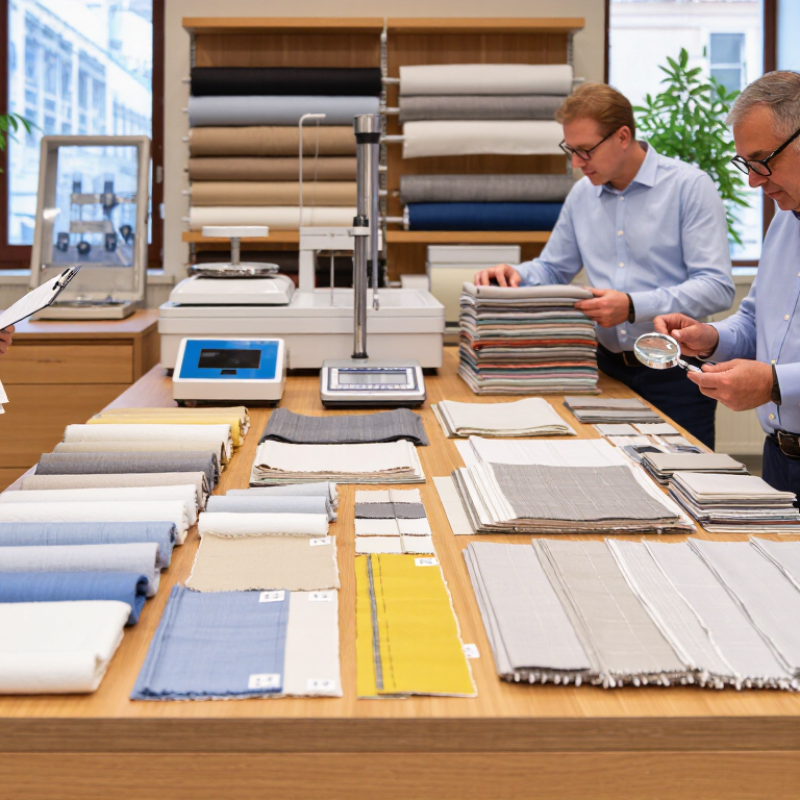
Group textile generally describes a coordinated textile supply structure rather than one specific fabric. Several mills, factories, or production units operate under shared specifications, management, or purchasing requirements. The term can vary between markets, so buyers should confirm its meaning before signing a supply agreement.
Its core feature is coordination. A buyer may request identical yarn counts, fabric weights, dye shades, and finishing standards from multiple facilities. Shared technical sheets reduce variation between production batches. Centralized quality control can also check colorfastness, shrinkage, tensile strength, and stitching accuracy. Traceability is essential. Reliable suppliers should identify fiber sources, processing locations, inspection dates, and shipment records.
Capacity is another practical advantage. A coordinated group can divide a large order across suitable units while keeping the same product specifications. This may improve delivery flexibility during seasonal demand. It is not automatically better, however. Different facilities can interpret “the same standard” differently. I have seen small differences in drying temperature create visible shade changes. Buyers should request samples from each production unit, compare laboratory reports, and approve a sealed reference sample. Written procedures matter more than attractive claims. Clear tolerances, corrective actions, social compliance records, and independent inspections make the structure more dependable. Even then, communication gaps remain possible. Regular production updates and pre-shipment checks can expose problems before goods leave the country.
Main Categories and Common Applications of Group Textile
Group textile refers to textile products purchased in coordinated quantities for organizations, projects, or distribution networks. Global buyers commonly divide them into several practical categories. Woven textiles use interlaced yarns and offer stable structure for shirts, workwear, curtains, and upholstery. Knitted textiles stretch more easily, making them suitable for sportswear, underwear, socks, and flexible uniforms. Nonwoven fabrics are bonded rather than traditionally woven. They appear in hygiene products, filtration layers, protective covers, and disposable packaging.
Technical textiles serve demanding environments. Flame-resistant fabrics support industrial workwear, while water-resistant materials fit outdoor furniture, tents, and transport covers. Medical textiles include hospital bedding, gowns, wound-care materials, and privacy curtains. Home and hospitality textiles cover towels, bedsheets, tablecloths, and mattress fabrics. These products often require repeated washing, color stability, and controlled shrinkage. Small defects become expensive at scale.
Global buyers should match each category with its actual application. A hotel may test absorbency and laundering durability, while a construction buyer may focus on tensile strength and weather resistance. Request fiber content, fabric weight, width, finishing details, and test reports. Sample approval matters. A color card is not enough. Lighting can change the result. Buyers should also inspect packing methods, carton labels, batch records, and production consistency. In practice, specifications sometimes fail because users describe appearance but ignore performance. That gap deserves careful review.
What Is Group Textile and How Can Global Buyers Source It? - Main Categories and Common Applications of Group Textile
| Textile Category | Typical Fiber or Material Composition | Key Performance Characteristics | Common Applications | Typical Global Buyer Requirements | Sourcing and Quality Checkpoints |
|---|---|---|---|---|---|
| Woven Fabrics | Cotton, polyester, nylon, viscose, linen, wool, or blended yarns arranged in a stable warp-and-weft structure. | Good dimensional stability, controlled thickness, abrasion resistance, and a wide range of weights and finishes. | Shirts, trousers, uniforms, workwear, curtains, bags, upholstery, bedding, and home decoration products. | Fiber content, fabric width, weight, weave construction, colorfastness, shrinkage, tensile strength, and finishing requirements. | Confirm greige or finished-fabric status, inspect weave defects, test width and weight, and approve a production sample before bulk manufacturing. |
| Knitted Fabrics | Cotton, polyester, nylon, acrylic, elastane, wool, viscose, and mixed fibers formed through looped yarn structures. | Stretch, softness, breathability, comfort, drape, and suitability for close-fitting garments. | T-shirts, sportswear, underwear, sweaters, leggings, children's clothing, socks, and casual apparel. | Knit structure, stretch and recovery, fabric weight, pilling resistance, spirality, colorfastness, and dimensional change after washing. | Check fabric relaxation time, measure width under controlled conditions, carry out wash tests, and inspect for holes, dropped stitches, and uneven dyeing. |
| Home Textiles | Cotton, polyester, microfiber, linen, wool, acrylic, viscose, and blended materials used in finished household products. | Comfort, absorbency or easy-care performance, durability, appearance retention, and suitability for repeated laundering. | Bed sheets, duvet covers, towels, blankets, table linens, curtains, cushions, mattress protectors, and kitchen textiles. | Finished dimensions, fabric weight, seam strength, shrinkage, colorfastness, absorbency, filling weight, and packaging specifications. | Verify measurements after washing, inspect seams and hems, test filling distribution where applicable, and confirm folding and carton requirements. |
| Technical Textiles | Polyester, polypropylene, aramid, fiberglass, carbon fiber, PTFE, PVC-coated fabric, and other engineered fibers or coatings. | Designed for specific functions such as strength, filtration, flame resistance, chemical resistance, reinforcement, or weather protection. | Filtration media, geotextiles, protective clothing, automotive components, construction membranes, agricultural covers, and industrial belts. | Application-specific performance standards, basis weight, tensile strength, tear strength, permeability, temperature resistance, and chemical compatibility. | Define the end-use conditions clearly, request laboratory test reports, verify traceability, and conduct performance testing on production lots. |
| Nonwoven Textiles | Polypropylene, polyester, viscose, cellulose, polyethylene, or blended fibers bonded mechanically, thermally, or chemically. | Lightweight structure, filtration potential, liquid absorption, disposable use, softness, and efficient roll-to-roll production. | Hygiene products, medical gowns, masks, wipes, crop covers, packaging, insulation, filtration, and construction underlay. | Basis weight, thickness, air permeability, absorbency, wet strength, filtration efficiency, softness, and roll dimensions. | Confirm bonding method, test uniformity across the roll, check edge quality, verify cleanliness, and review storage conditions for moisture-sensitive products. |
| Functional and Performance Fabrics | Polyester, nylon, elastane, polypropylene, wool, or blends with coatings, membranes, wicking treatments, or specialty finishes. | Moisture management, quick drying, stretch, wind resistance, water repellency, UV protection, odor control, or thermal regulation. | Outdoor clothing, activewear, swimwear, uniforms, travel apparel, rainwear, workwear, and sports accessories. | Hydrostatic pressure, breathability, moisture-wicking rate, stretch recovery, UV protection level, coating durability, and wash-cycle performance. | Test performance before and after laundering, check coating adhesion, confirm restricted-substance compliance, and use a sealed reference sample for bulk comparison. |
| Medical and Healthcare Textiles | Cotton, polyester, polypropylene, viscose, elastane, and specialized barrier or absorbent materials. | Hygiene, controlled absorbency, softness, barrier protection, low linting, breathability, or sterilization compatibility. | Surgical gowns, drapes, wound dressings, bandages, hospital bedding, patient garments, compression products, and reusable protective textiles. | Intended-use classification, barrier performance, biocompatibility where required, lint level, sterilization method, absorbency, and packaging integrity. | Match testing to the destination market, maintain batch traceability, review clean-production procedures, and verify packaging and labeling controls. |
| Recycled and Bio-Based Textiles | Recycled polyester, recycled nylon, recycled cotton, regenerated cellulose, hemp, flax, wool, or other bio-based fibers. | Reduced dependence on virgin resources, sustainability positioning, and performance that varies according to fiber source and processing. | Apparel, bags, home textiles, footwear components, packaging textiles, uniforms, and environmentally focused product lines. | Verified material content, fiber traceability, physical performance, color consistency, chemical compliance, and sustainability documentation. | Request valid transaction certificates where applicable, distinguish pre-consumer from post-consumer content, audit chain of custody, and test recycled fiber claims. |
| Decorative and Upholstery Textiles | Polyester, cotton, linen, viscose, acrylic, wool, chenille, velvet constructions, and coated or laminated fabrics. | Visual appeal, abrasion resistance, lightfastness, handle, drape, stain resistance, and suitability for furniture or interior use. | Sofas, chairs, cushions, wall coverings, curtains, event decoration, hospitality interiors, and vehicle interiors. | Martindale or equivalent abrasion results, seam slippage, colorfastness to light, flame performance, width, pattern repeat, and coating requirements. | Approve shade bands and pattern placement, test complete fabric constructions, inspect roll matching, and confirm local interior-textile regulations. |
| Industrial and Transport Textiles | High-tenacity polyester, nylon, polypropylene, aramid, PVC-coated fabrics, rubberized fabrics, and reinforced composites. | High tensile strength, tear resistance, dimensional stability, weather resistance, and extended service life in demanding environments. | Conveyor components, lifting slings, tarpaulins, tents, cargo covers, hoses, safety harnesses, vehicle interiors, and reinforcement materials. | Load capacity, tensile and tear strength, coating thickness, UV resistance, operating temperature, flame performance, and safety certification. | Specify testing methods and safety factors, verify lot traceability, inspect reinforcement and stitching, and request third-party testing for critical applications. |
How Group Textile Is Manufactured and Quality Controlled
Group textile describes a coordinated textile supply model involving fiber preparation, yarn production, fabric formation, dyeing, finishing, and garment assembly. Each stage affects the next one. A buyer should ask how materials move between departments, not only where the final product is packed. Clear production records make this chain easier to verify.
Manufacturing usually begins with fiber inspection. Technicians check fiber length, moisture, color, and visible contamination. Spinning converts fibers into yarn with controlled strength and evenness. Weaving or knitting then creates the fabric structure. During dyeing, operators monitor water temperature, chemical dosage, pH, and processing time. Small errors can change shade or shrinkage. Finishing may add softness, water resistance, or dimensional stability, depending on the specification.
Quality control should work at several points. Inspectors test yarn strength, fabric weight, colorfastness, width, and tearing resistance. A four-point fabric inspection can record holes, slubs, stains, and weaving faults. Samples should be compared with approved standards under consistent lighting. Production teams also need lot numbers and inspection reports for traceability. No process is flawless. Even experienced operators can miss a minor shade difference during a busy shift. Random rechecking, independent review, and honest corrective records reduce that risk. Buyers can request test methods, sampling plans, and recent quality data before approving bulk production.
Key Factors Global Buyers Should Evaluate Before Sourcing
What Is Group Textile and How Can Global Buyers Source It?
In sourcing practice, “group textile” usually describes a coordinated textile supplier group, including mills, dye houses, laboratories, and garment facilities. This structure can offer broader capacity than one factory. However, a larger network does not automatically mean better control. Textile Exchange reported that global fiber production reached 124 million tonnes in 2023 and may rise to 160 million tonnes by 2030. Buyers therefore need evidence, not attractive claims.
Key Factors Global Buyers Should Evaluate Before Sourcing
Start with material traceability. Ask where the yarn was spun, where the fabric was dyed, and which facility completed testing. Request batch records, fiber certificates, and recent laboratory reports. The test should match the final fabric, not only the raw fiber. Quality consistency matters too. Check shrinkage, colorfastness, pilling, fabric weight, and needle-line appearance from several production lots.
Capacity needs careful testing. Compare monthly output with actual machine lists, staffing, dyeing schedules, and peak-season lead times. A supplier promising 100,000 meters may deliver less during holiday closures or energy restrictions.
The International Trade Centre highlights the importance of reliable trade data and supply-chain visibility when assessing international sourcing risks. Buyers should also examine wastewater controls, worker protections, and chemical management.
Audit papers can be outdated. That weakness is easy to miss.
Price deserves a wider calculation. Include sampling, inspection, testing, freight, duties, rework, and delayed delivery. Textile Exchange’s material reports also show continued dependence on synthetic fibers, making recycled-content verification increasingly important. A certificate helps, but chain-of-custody records provide stronger assurance. Sometimes the cheapest quotation is simply an unfinished calculation.
Step-by-Step Process for Sourcing Group Textile Internationally
What Is Group Textile and How Can Global Buyers Source It?
Group textile usually means sourcing coordinated textile products across several categories, factories, or countries. It may include fabric, yarn, apparel, home textiles, and accessories under one purchasing plan. This model helps buyers compare capacity, quality, and delivery risks. Textile Exchange’s 2024 Materials Market Report recorded 124 million tonnes of global fibre production in 2023. That volume may reach 160 million tonnes by 2030. Buyers therefore need evidence, not attractive samples alone.
Step-by-step sourcing starts with a clear product brief.
Define fibre content, fabric weight, colours, dimensions, certifications, packaging, and target quantities. Then screen suppliers through factory audits, production records, test reports, and export experience.
Request matching samples from at least three qualified sources. Compare shrinkage, colourfastness, seam strength, and lead times. Confirm minimum order quantities and payment terms in writing.
Use a small pilot order before scaling. The International Textile Manufacturers Federation regularly identifies cost pressure and uncertain demand as major industry concerns. A cheaper quotation can hide weaker controls. I have seen spreadsheets look complete while missing dye-lot consistency.
Tips:
- Keep one inspection checklist.
- Ask for batch-level records.
- Verify certificates directly with the issuing body.
- Build a buffer for shipping delays.
- Do not assume one supplier can manage every textile category well.
- Mistakes happen.
- Reflect after each shipment, and revise the brief.
Related Posts
-
2026 Best Innovations Transforming the Textile Industry?
-
How to Choose the Best Group Textile for Your Next Project?
-

Digital Trends Best Practices in the Textile Industry?
-

How to Thrive in the Textile Industry in 2026?
-
Top Trends in the Textile Industry You Should Know?
-

How to Succeed in the Textile Business for Global Buyers?