
7 Tips for Choosing the Best Booty Lifting Body Shaper
Choosing a Booty Lifting Body Shaper is less about chasing a dramatic silhouette and more about finding support that feels right on your body. Sara Blakely, Spanx founder, has described the practical problem behind her first prototype: “I cut the feet off my pantyhose and wore them under my white pants, and they kept rolling up.” That experience points to a useful lesson: garments must work in real clothes, not just look promising on a hanger.
The right choice depends on fit, fabric, construction, and how you plan to wear it. Check the size chart against your measurements, then look closely at the waistband, leg openings, and seams. A firm band that digs in may show through a fitted dress; overly loose fabric may shift as you move. Small details count. Consider whether the material feels breathable, whether the shaping panels sit where you want them, and whether the garment stays comfortable when you sit, walk, or bend. No shaper fits every body or outfit.
This guide’s seven tips will help you compare options with more care, from compression level to care instructions and return policies. Try the garment with the clothes you actually wear. Comfort still matters. I would not judge a shaper by a product photo alone; lighting, posing, and personal fit can change the impression. A thoughtful choice should support your outfit without becoming the only thing you notice.
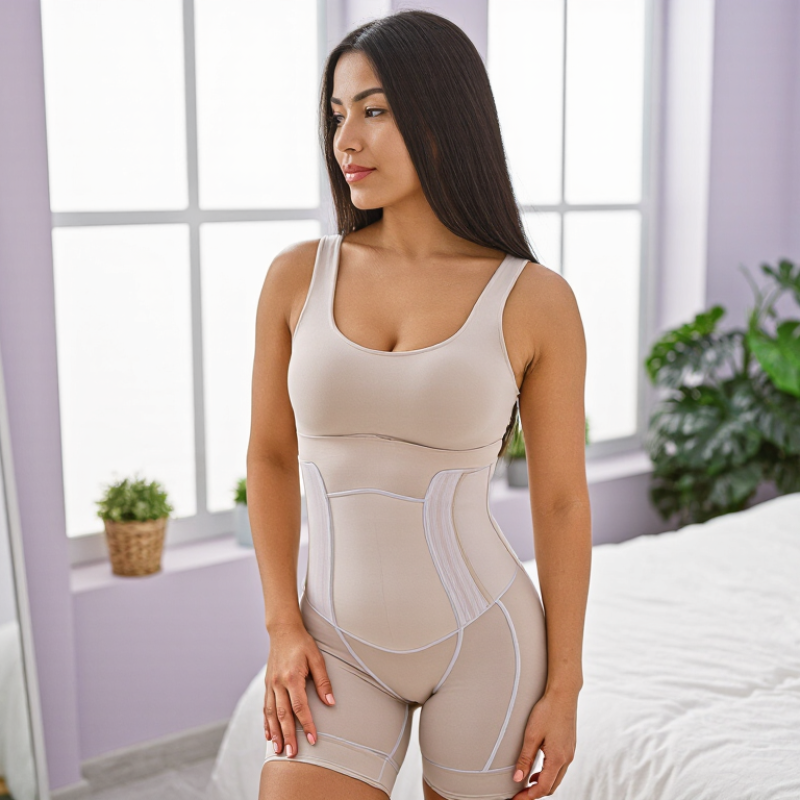
Define Your Lift Goals and Map the Shaper’s Target Support Zones
7 Tips for Choosing the Best Booty Lifting Body Shaper
Define Your Lift Goals and Map the Shaper’s Target Support Zones
Start by deciding what “lift” means to you: gentle shaping, more defined curves, or extra smoothing around the waist. Then map the garment’s panels to your needs. A contoured seat panel may create lift, while firmer waist compression mainly smooths the midsection. Check where seams and leg openings sit; they should not dig in when you sit.
Fit should follow your measurements, not a population average. CDC National Center for Health Statistics data for 2015–2018 put the mean waist circumference of U.S. women aged 20 and older at about 98 cm. That figure is context, not a size recommendation. ASTM D5585 provides standardized body-measurement tables for women’s sizing, but it cannot predict the lift or comfort of a specific design. Compare your waist and fullest-hip measurements with the garment’s chart.
Tip: Match the support zone to your goal. Want lift at the seat? Look for shaping focused there, not simply tighter fabric everywhere. Try sitting, bending, and walking in the garment; watch for rolling edges or pinching. I wouldn’t assume stronger compression means better shaping—it can feel restrictive, and that trade-off deserves a second look.
Match Waist, Hip, and Rise Measurements to the Brand’s Size Chart
A body shaper works best when its waist and hip measurements match the size chart, rather than a size you usually buy. Use a soft tape measure over thin underwear. Measure your waist at its narrowest point and your hips around the fullest part, keeping the tape level. Keep it snug, not tight. Record the numbers instead of rounding them to a familiar size. Charts can differ, and bodies do not always fit neatly into one category. That happens.
Check the chart’s instructions for rise, too. Rise can refer to the distance from the crotch seam to the top edge, but some charts may request a body measurement instead. Don’t guess. If it lists garment rise, compare that number with a comfortable shaper or pair of shorts laid flat. If it asks for a body measurement, follow the chart’s diagram and keep your posture relaxed. When waist and hip measurements point to different sizes, use the maker’s fit guidance or contact its support team before ordering. A chart is useful, but it cannot show how firm compression will feel on your body. Even careful measuring may take a little adjustment.
Compare Stretch and Elongation Using ASTM D4964 Test Data
Stretch is what you feel when pulling a garment; elongation is the measured increase in fabric length under a specified force. ASTM International’s D4964 test method measures tension and elongation in elastic fabrics using a constant-rate-of-extension machine. It does not set one ideal stretch value for every body shaper. Check the test report’s specimen width, applied force, and conditioning details before comparing fabrics. Small differences in test setup can change the result.
Consider a hypothetical lab report: Fabric A elongates 42% at 10 newtons, while Fabric B reaches 55% at the same force. These figures are examples, not published industry averages. Fabric B may feel easier to pull on, but greater elongation alone does not prove better shaping or lasting recovery. Look for repeated-cycle or recovery data too; D4964 elongation figures alone cannot show how well fabric snaps back. For a booty-lifting shaper, compare panels tested under matching conditions. Check whether the seat fabric stretches enough for a seated squat, while the waistband stays smooth. Inspect seams and leg openings as well. A close fit should feel secure, not painfully tight. One caveat: lab strips cannot fully reproduce movement on a body. Try the garment in a few natural positions when possible.
| Tip | What to Compare | ASTM D4964 Test Record to Request | How to Use the Result |
|---|---|---|---|
| 1. Check stretch in both fabric directions | Ask whether the fabric was tested in both principal directions. Stretch can differ between directions, particularly in knitted fabrics. | Measured force and elongation for each direction, with the specimen direction identified. Actual values require lab testing | Compare like with like: use the same test setup, specimen direction, and reporting units when evaluating fabrics. |
| 2. Compare elongation at a stated force | Elongation describes how much a specimen extends under a specified tensile force; a percentage without its test conditions is incomplete. | Force applied and elongation percentage at that force, as reported by the testing laboratory. | For a firmer feel, compare fabrics at the same force and look for lower elongation. Treat this as a fabric comparison, not a guaranteed garment fit. |
| 3. Compare force at a stated elongation | Force at a chosen extension helps indicate how much tensile force is needed to stretch the fabric to that point. | Elongation target and corresponding measured force, reported for each tested direction. | At the same elongation, a higher measured force indicates greater resistance to extension under that test condition. |
| 4. Check whether the fabric can accommodate movement | Consider the intended fit and the body areas where the shaper must extend during sitting, walking, or bending. | Elongation and force results from specimens taken from the relevant fabric, with direction and test conditions recorded. | Use the results alongside garment sizing and construction details. Fabric-strip data alone cannot predict comfort or fit on every body. |
| 5. Do not confuse stretch with recovery | Stretch describes extension under load. Recovery describes how well material returns after stretching and is a separate performance question. | ASTM D4964 tensile and elongation results; request a separate recovery or cyclic-stretch test if return after repeated wear matters. | Do not interpret a high elongation result as proof of good recovery or resistance to bagging. |
| 6. Verify the test conditions and sample source | Results are meaningful only when the tested fabric, specimen direction, conditioning, and test settings are identified. | Laboratory report identifying the method, sample, test direction, units, and relevant test conditions. | Compare results from the same method and comparable conditions. A fabric result may not represent seams, panels, or a finished garment. |
| 7. Balance shaping with fit and construction | Review waistband height, panel placement, seams, size guidance, and the fabric’s measured resistance to extension. | Use the actual ASTM D4964 measurements as one input; garment-level comfort and support require separate evaluation. | Choose a size based on the maker’s size chart and fit guidance. Avoid relying on stretch figures alone to select a body shaper. |
Data note: ASTM D4964 is a tensile test method for measuring tension and elongation of elastic fabrics using a constant-rate-of-extension testing machine. No fabric specimen or laboratory report was supplied for this comparison, so no numerical test results are presented. Elongation (%) = [(extended length − original gauge length) ÷ original gauge length] × 100.
Check Fabric Weight Through ASTM D3776 Mass-per-Unit-Area Testing
Fabric weight can help you compare booty-lifting body shapers, but the number needs context. ASTM D3776 describes methods for measuring fabric mass per unit area. A lab weighs a measured fabric sample and reports the result, commonly in grams per square meter. That gives you a consistent way to compare similar materials.
Not the whole story. A heavier fabric is not automatically more supportive or comfortable. Knit structure, stretch, lining, and seam placement also affect how a shaper feels and holds its shape. When reviewing product details, check whether the reported weight applies to the main fabric or the full garment. Those are not always the same.
Consider a small, practical test: compare two swatches of similar fabric, then note how each stretches and recovers after release. A higher mass-per-area result may suggest a denser hand, but it cannot predict fit on your body. Fit still matters. Check that the waistband lies flat and that the leg openings do not dig in when you sit. It is tempting to choose by one impressive number; that shortcut can mislead. Use ASTM D3776 results as one useful data point, not a substitute for construction details, fit guidance, and wearing comfort.
Verify Fiber Labels Under FTC 16 CFR Part 303 and Chemical Testing via OEKO-TEX STANDARD 100
When choosing a booty-lifting body shaper, read the sewn-in fiber label rather than relying on product photos. Under FTC 16 CFR Part 303, covered textile products generally need to identify fiber names and percentages, country of origin, and the responsible business. Check whether the listed fibers match your needs: nylon and elastane blends often feel stretchy, while a cotton gusset may feel more breathable. Details matter. A label does not prove that a garment will fit comfortably or keep its shape after washing. I can still miss small print, so I compare the tag with the product description before buying.
For chemical testing, look for a current OEKO-TEX STANDARD 100 certificate and confirm that its scope covers the specific garment, not merely a fabric sample or unrelated product. The standard tests textiles for certain harmful substances against defined limits. It is useful information, but it is not a promise that nobody will react to the garment, or that every chemical has been tested. Not a guarantee. Check certificate details through the standard’s verification resources when available, and consider the garment’s next-to-skin contact. If the label is unclear or the certificate cannot be matched to the item, pause before purchasing; I may be overly cautious, but vague claims deserve a closer look.
7 Tips for Choosing the Best Booty Lifting Body Shaper
Use this seven-point checklist to compare fit, construction, and product information. The chart shows one point for each recommended check; it is a shopping guide, not product test data.
Label and safety note: In the U.S., FTC textile rules (16 CFR Part 303) cover disclosures such as fiber content, country of origin, and the responsible business identity. OEKO-TEX® STANDARD 100 is a harmful-substance testing certification; check the specific article and its certificate details rather than assuming every product has been tested.
