
How to Choose the Best Scrub Pants in 2026?

Choosing the best Scrub Pants in 2026 means looking beyond color and price. A pair may feel soft in the fitting room, then bind at the knees during a long shift. Check the fabric’s stretch, breathability, and recovery after washing. Look closely at the waistband, seams, and pocket placement. Small details matter.

For an honest perspective, the expert voice here is fictional, not a real-world endorsement. In this editorial example, scrubwear product developer Maya Bennett says, “Good Scrub Pants should move with the wearer, stay comfortable through repeated washes, and keep essentials easy to reach.” Treat that as a practical design principle, not a verified quotation from a named industry authority.

Your daily routine should guide the choice. Do you bend often, carry small tools, or work in a warm environment? Compare straight-leg, jogger, and tapered cuts, then check the size chart against your measurements. A deep pocket can help, but bulky contents may pull the fabric out of shape. There is no perfect pair for every role. Even careful reviews cannot predict how every fabric will feel after months of wear. That part is easy to overlook.

This guide will compare fit, fabric, durability, storage, and value to help you narrow the options. Bring your real shift needs into the decision. Comfort is personal. A quick try-on is useful, but a full workday tells a fuller story.
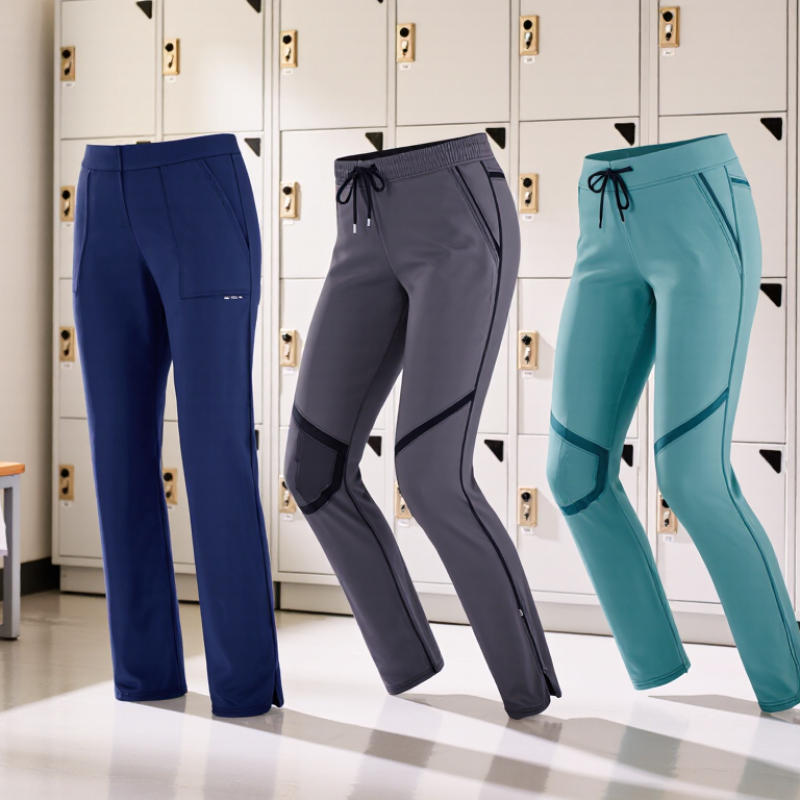
How to Choose the Best Scrub Pants in 2026?

Define Your Workplace Needs and Daily Tasks

Scrub pants should match the work, not just the dress code. A nurse moving between patient rooms may need stretch fabric, secure pockets, and a waistband that stays comfortable during repeated bending. A laboratory worker may value a closer fit that keeps loose fabric away from benches. Small details matter. Check where you carry a phone, shears, or access card before choosing pocket placement.

The U.S. Bureau of Labor Statistics’ 2022 Survey of Occupational Injuries and Illnesses recorded 4.5 cases per 100 full-time workers in healthcare and social assistance, and 6.0 in nursing and residential care facilities. These figures describe workplace injuries and illnesses, not clothing effects. They do, however, underline how varied and physically demanding care settings can be. Think about long shifts, frequent walking, and whether you need to kneel or reach overhead. Try a squat, a high step, and a seated bend in the pants. Fabric that feels fine in a fitting room may pull at the knees after hours. I would not assume one cut suits every shift. A slightly imperfect fit can be easy to overlook—until the pockets bounce or the waistband rolls during a busy round.

Compare Scrub Pant Fabrics, Stretch, and Breathability

How to Choose the Best Scrub Pants in 2026? Compare Scrub Pant Fabrics, Stretch, and Breathability

Start with the fabric, but don’t judge comfort by fiber name alone. Textile Exchange’s 2024 Materials Market Report estimates that polyester made up 57% of global fiber production in 2023. That scale makes polyester blends common, not automatically comfortable. A lightweight weave may feel cooler than a dense one, even when both use similar fibers. Check the fabric weight and how air moves through it. Small details matter.

For long shifts, look for stretch that lets you squat, reach, and climb stairs without pulling at the knees. A small amount of elastane can improve movement, while a gusseted crotch may reduce pressure during repeated bending. Too much stretch can feel clingy or lose shape. Try a deep squat. Does the waistband stay put? Breathability also depends on construction, fit, and finishes—not just cotton versus synthetics. AATCC TM195 measures liquid moisture management, while ASTM D737 tests air permeability; these methods offer more useful comparisons than vague “cooling” claims.

If you work in warm rooms, prioritize a lighter fabric and a relaxed fit around the thighs. In colder clinics, a denser weave may feel more comfortable. I still find this easy to misjudge: a pant that feels airy in a changing room can feel different after hours of movement. Check the care label, since repeated hot washing may affect stretch and shape. Comfort is personal. Test before committing.

Choose the Right Fit, Waistband, and Length

How to Choose the Best Scrub Pants in 2026?
Choose the Right Fit, Waistband, and Length

A good fit should let you bend, reach, and sit without tugging at the fabric. Try a deep squat and a long step before checking the mirror. If the waistband rolls or presses into your abdomen, it may feel worse during a long shift. Drawstrings can fine-tune the fit, but they should not need constant tightening. Small detail. ASTM International’s D5585 standard lists body measurements used for women’s apparel sizing; compare your measurements with each garment’s own size chart rather than assuming sizes match.

Waistband choice depends on movement and personal comfort. Elastic offers quick flexibility, while a drawstring helps adjust the waist as layers change. A snug waistband should stay put without leaving marks. In 2022, the U.S. Bureau of Labor Statistics recorded about 565,000 nonfatal injury and illness cases in healthcare and social assistance. That figure does not measure clothing-related discomfort, but it underscores why ease of movement matters in demanding work.

Length is easier to judge with your usual work shoes on. Hems that drag can collect dirt or catch underfoot; overly short legs may ride up when you kneel. Aim for a hem near the top of your shoe, with enough room to move. I’d check it again after washing, because fabric can shrink. It’s easy to overlook. A slightly imperfect mirror check is still better than choosing by label alone.

How to Choose the Best Scrub Pants in 2026? - Choose the Right Fit, Waistband, and Length

What to Compare Option or Measurement Best For What to Check Before Buying
Overall fit Classic straight fit People who want a balanced fit with room to move through a shift. Check that the seat and thighs allow you to sit, bend, and walk without pulling. The leg should fall comfortably over your footwear.
Overall fit Relaxed fit Those who prefer more room, especially through the hips and thighs. Look for enough ease to move freely without excess fabric catching on equipment or dragging near the floor.
Overall fit Tapered or jogger fit People who prefer a closer silhouette and a cuffed or narrower ankle. Make sure the leg opening does not restrict movement and the cuff stays above the floor when standing and walking.
Waistband Full elastic waistband Those who prioritize an easy-on fit and flexible comfort. Check for even stretch and a secure fit that does not roll, pinch, or slip during movement.
Waistband Drawstring waistband People who want adjustable waist security throughout the day. Test whether the drawstring can be tied comfortably and stays secure without digging into the waist.
Waistband Elastic back with a flat front Those who want some flexibility with a smoother front appearance. Check that the front closure and waistband sit comfortably when seated, and that the elastic back has enough stretch.
Length Petite or short inseam Wearers who find standard lengths bunching or dragging at the hem. Compare the garment’s stated inseam with a pair of pants that fits well. Petite lengths are often around 28–30 inches, but sizing varies.
Length Regular inseam Wearers who typically find standard trouser lengths comfortable. Regular inseams are commonly around 30–32 inches. Check the actual garment measurement and consider the shoes worn at work.
Length Tall or long inseam Wearers who need extra length to avoid a high hem while standing or walking. Tall lengths are often around 32–34 inches. Confirm the listed inseam, since ranges and labels differ between garments.
Personal measurements Waist, hip, and inseam Anyone choosing between sizes or shopping online. Measure your waist where the pants will sit, the fullest part of your hips, and the inside leg from crotch to hem. Compare all three with the garment’s size chart.
Movement and finish Try sitting, squatting, and reaching Anyone who needs pants to stay comfortable through a full workday. Check for waist gaping, tightness at the thighs, restricted knees, exposed ankles, or hems that touch the floor.

Inseam ranges are general reference points, not fixed industry standards. Garment measurements and size labels vary, so use the specific product’s size chart whenever available.

Evaluate Pockets, Durability, and Care Requirements

A good scrub-pant pocket should hold a phone, pen, and folded gloves without pulling the waistband sideways. Check that pocket openings stay flat when you sit, and inspect bartacks at stress points such as corners and seams. Small details matter. For durability, look beyond fabric weight: ask whether the garment has been tested for seam strength, pilling, and color retention. AATCC TM61 uses a 45-minute accelerated laundering procedure that can approximate five home washes. It is a screening method, not a promise of five identical washes or a specific garment lifespan. Not a guarantee.

Care needs can decide whether pants remain practical through frequent shifts. Read the care label for washing temperature, bleach restrictions, and drying instructions; high heat may shorten the life of some stretch fabrics. CDC healthcare-laundry guidance describes institutional hot-water washing at 71°C or above for at least 25 minutes. That guidance is not a universal home-laundry rule. Follow your facility’s policy and the garment label instead. I still find care labels easy to overlook when buying online, so check them before choosing a fabric that needs special handling.

Balance Comfort, Quality, and Price Before Buying

The best scrub pants balance comfort, construction, and a price you can justify. During a fitting, check how the fabric feels against your skin and whether the waistband stays comfortable when you sit. Sit, bend, and reach. The pants should move without pulling at the knees or sliding at the back. Small details matter. Inspect the seams, zipper, and pocket stitching; loose threads or uneven seams may signal weaker construction. Check that pockets hold a phone without swinging against your thigh. A fabric that feels soft in the store may still trap heat during a long shift, so consider its weight and care instructions.

Price makes more sense when you consider how often you will wear and wash the pants. Compare similar fabrics and features, not just the numbers on the tags. A cheaper pair that loses its shape quickly may cost more over time. Still, expensive does not automatically mean durable. Read the care label, and look for clear information about shrinkage and washing. Keep receipts. One detail people often overlook is fit after washing; fabric can tighten slightly, even when the label suggests otherwise. If possible, check the return terms before removing tags, then try the pants at home with the shoes you wear on shift.

How to Choose the Best Scrub Pants in 2026

A practical 100-point decision framework: compare comfort, quality, and price, then adjust the suggested weights to match your needs. These are editorial guidelines, not survey results or product ratings.

Scroll to Top