
How to Choose Gray Suit Fabric in 2026?

Choosing Gray Suit Fabric in 2026 requires more than matching a color to a trend. The right cloth must suit your climate, work routine, body movement, and expected level of formality. Gray remains versatile, but not every gray performs equally. A cool charcoal can look sharp under office lighting, while a pale flannel may appear softer outdoors. Small details matter.

A reliable choice begins with fiber content, fabric weight, weave, and finish. Superfine wool offers a refined surface, yet it may crease or wear faster with daily use. Wool blends can improve durability, stretch, and maintenance. For warmer climates, lighter wool or breathable wool-linen options may feel more comfortable. For colder months, flannel adds texture and warmth. Touch the fabric. Hold it toward natural light. Check whether the surface rebounds after gentle pressure.

Fit still matters more than a luxury label.

A practical Gray Suit Fabric assessment should include season, travel needs, and tailoring quality. A tightly woven cloth may resist wrinkles during commuting, but it can feel less airy. A softer fabric may drape beautifully, but it might demand careful pressing. No material performs perfectly. That trade-off is easy to overlook. Even experienced buyers can focus too heavily on appearance. This guide examines current fabric choices with a balanced, evidence-informed approach. It considers comfort, durability, visual texture, maintenance, and value. The goal is not to chase every 2026 fashion shift. It is to choose a gray suit fabric that remains useful after the first fitting, the first business trip, and many ordinary working days.
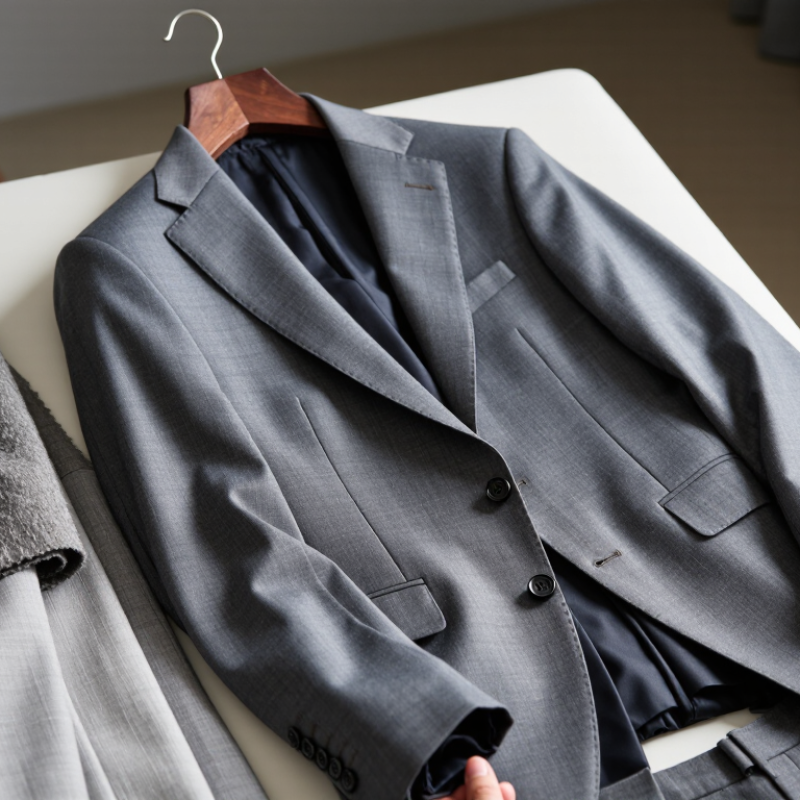
How to Choose Gray Suit Fabric in 2026?

Define Your Gray Suit’s Purpose, Setting, and Expected Wear

How to Choose Gray Suit Fabric in 2026?

Define Your Gray Suit’s Purpose, Setting, and Expected Wear

Start with the suit’s real job, not its color alone. A charcoal suit in tightly woven wool suits interviews, formal meetings, and evening events. Medium gray feels more flexible for offices, travel, and daytime ceremonies. Light gray works well in warm settings, but it can look too casual under harsh indoor lighting. Consider your climate, commute, and washing options before choosing the cloth.

Fabric weight changes comfort and appearance. Lightweight wool, around 230–260 grams, feels cooler and travels easily. However, it may crease sooner. A 270–320 gram fabric usually hangs better and handles repeated wear. Look for a breathable weave in warmer weather. For frequent commuting, a modest wool blend can improve resilience, though it may feel less refined. I once favored softness over recovery. The trousers showed wear quickly.

Tips: Match the fabric to expected use. For weekly wear, choose a midweight cloth with a visible, firm weave. Check the jacket under daylight, office light, and camera flash. Gray can shift noticeably. Rub the fabric gently between your fingers. It should feel substantial, not stiff. Ask about care instructions and alteration limits. A reliable tailor should explain both clearly. Avoid choosing only by touch; movement, climate, and maintenance often matter more.

Compare Gray Suit Fabrics by Fiber, Weave, Weight, and Texture

How to Choose Gray Suit Fabric in 2026?

Fiber sets the fabric’s character. According to Textile Exchange’s Materials Market Report 2024, polyester represented about 59% of global fiber production in 2023. Recycled polyester accounted for roughly 12% of polyester output. It offers durability and easy care, but can feel less breathable. Wool remains a strong tailoring choice. The International Wool Textile Organisation estimates wool represents only about 1% of global fiber supply. Its natural elasticity helps a gray suit recover after sitting. Wool-linen blends feel cooler, though they crease faster.

Weave changes how gray reflects light. Worsted twill creates a clean, professional surface with subtle diagonal lines. Hopsack feels more open and breathable, but it may snag more easily. Flannel adds a soft, brushed texture and makes charcoal look deeper. For office wear, choose a medium weight near 240–280 grams per meter. Lightweight cloth suits warm commutes. Heavier cloth hangs better in cold weather. These ranges are practical, not universal rules.

Texture deserves a hand test. Rub the fabric gently between your fingers. A good cloth should feel firm, not plastic-slick. I once chose a very smooth gray fabric that looked impressive under showroom lights. It felt too warm after one train journey. That mistake still matters. Fiber labels can mislead without weave and finishing details. Check recovery, surface fuzz, and crease behavior before deciding.

How to Choose Gray Suit Fabric in 2026? — Compare Gray Suit Fabrics by Fiber, Weave, Weight, and Texture

Fabric Option Main Fiber Typical Weave Typical Weight Surface & Texture Drape & Breathability Wrinkle Resistance Best Use Care Consideration
Worsted Wool 100% wool, usually combed long fibers Plain weave, twill, or hopsack 230–280 g/m² Smooth, clean, lightly lustrous, and refined Excellent drape; naturally breathable across multiple seasons Good; wool fibers recover from light creasing Business suits, interviews, formal events, and versatile daily wear Dry clean sparingly; air and brush between wears
Flannel Wool 100% wool, sometimes made from fine or medium fibers Soft twill with a lightly raised finish 280–360 g/m² Soft, brushed, matte, and slightly fuzzy Full drape; warm and moderately breathable Good, although the softer surface can show wear over time Cool-weather business, smart-casual tailoring, and winter occasions Use a clothes brush; avoid frequent pressing and excessive friction
Tropical Wool Lightweight 100% wool Open plain weave or lightweight hopsack 180–230 g/m² Light, airy, and usually smooth with a subtle grain Very breathable; lighter drape with less body Moderate; lighter cloth can crease more easily Warm climates, summer weddings, travel, and indoor office wear Hang carefully and allow adequate recovery time between wears
Wool–Mohair Blend Wool blended with mohair, commonly 10–30% mohair Plain weave or sharp twill 230–300 g/m² Crisp, slightly lustrous, and smooth with a dry hand Structured drape; breathable and naturally cool to the touch Very good; mohair adds resilience and crease recovery Warm-weather formal suits and sharply tailored evening wear May feel less soft than pure wool; store on a shaped hanger
Wool–Linen Blend Wool blended with linen, often in balanced or wool-dominant ratios Plain weave, hopsack, or textured basket weave 220–300 g/m² Dry, textured, and naturally irregular with a relaxed appearance Breathable and airy; relaxed drape with some structure from wool Moderate to low; linen produces intentional creasing Summer tailoring, destination weddings, and relaxed business settings Expect some wrinkles; press gently and avoid over-dry-cleaning
Wool–Silk Blend Wool blended with silk, often 10–30% silk Fine twill, plain weave, or lightweight hopsack 220–280 g/m² Smooth, softly lustrous, and luxurious to the touch Fluid drape; generally breathable but less rugged than pure wool Moderate; silk can make the cloth more delicate Special occasions, evening suits, and polished spring-to-autumn tailoring Protect from abrasion, moisture, and prolonged direct sunlight
Wool–Cashmere Blend Wool blended with a small amount of cashmere Soft twill or compact plain weave 260–330 g/m² Exceptionally soft, warm, and subtly brushed Rich drape; warm with moderate breathability Good, but the softer fibers need gentle handling Luxury fall and winter suits, especially in charcoal gray Brush gently; rotate garments and limit professional cleaning
Polyester–Viscose Blend Polyester blended with viscose; ratios vary by fabric Plain weave, twill, or stretch twill 220–300 g/m² Smooth to lightly textured; usually more uniform than wool Moderate drape; breathability depends on blend and construction Very good; polyester improves durability and crease recovery Frequent commuting, uniforms, budget-conscious wardrobes, and travel Follow the care label; avoid excessive heat during pressing
Wool–Polyester Blend Wool blended with polyester, commonly wool-dominant Twill, plain weave, or compact suiting weave 240–320 g/m² Smooth with moderate body and a practical finish More structured than pure wool; breathability varies with wool content Very good; durable and resistant to frequent-use creasing Everyday office suits, travel, and high-rotation wardrobes Resists wear well; use a low-to-medium pressing temperature
Stretch Wool Blend Wool blended with a small percentage of elastane or another stretch fiber Stretch twill or compact plain weave 230–300 g/m² Smooth to subtly textured with comfortable movement Good drape; breathability depends mainly on the wool percentage Good; stretch improves comfort but does not eliminate creasing Modern office suits, commuting, and fitted silhouettes Avoid high heat, which can damage stretch fibers over time

Practical guide: Choose 230–280 g/m² worsted wool for the most versatile gray suit, tropical wool for hot weather, flannel or wool–cashmere for colder seasons, and wool–linen or wool–mohair blends when you want more summer texture and breathability. Fabric performance varies with fiber quality, yarn twist, finishing, lining, and garment construction.

Match Fabric Weight and Breathability to Your Climate and Season

How to Choose Gray Suit Fabric in 2026?

Match fabric weight and breathability to your climate before choosing a gray suit. In hot, humid regions, select lightweight wool around 220–260 grams per meter. A plain weave allows air to move more freely. It also dries faster after a crowded commute. Linen-wool blends feel cooler, but they can crease noticeably by lunchtime.

For mild spring and autumn weather, medium-weight wool between 260 and 320 grams offers better structure. It resists wrinkles and works comfortably indoors or outside. Colder climates need denser fabrics, usually 320–380 grams. A soft flannel can retain warmth without looking bulky. Check the lining, too. A heavy synthetic lining may cancel out the fabric’s breathability. In my fitting experience, people often blame wool for heat when the lining is the real problem.

Tips: Hold the cloth near a window and look for a tight, even weave. Press it gently in your hand. If it springs back, it may resist creasing better. Ask where the suit will be worn most often. A lightweight gray suit sounds practical, yet it may feel thin in strong winter wind. I once chose a fabric that looked perfect under shop lighting but felt cold outdoors. That mistake still influences my fabric tests. Feel the cloth in natural light.

Evaluate Durability, Comfort, Wrinkle Resistance, and Maintenance

How to Choose Gray Suit Fabric in 2026?

A gray suit should survive desk edges, crowded trains, and repeated weekly wear. Start with fiber balance, then inspect the cloth under direct light. The Textile Exchange 2024 Materials Market Report recorded polyester at about 57% of global fiber production in 2023. Polyester can improve resilience and drying speed, but excessive amounts may feel warm and less breathable. Fine wool remains a strong option because IWTO reports that wool can absorb up to 30% of its weight in moisture vapor. That helps manage dampness during long meetings.

Durability needs more than a confident sales claim.
Ask for abrasion results using ASTM D4966 or an equivalent Martindale method. Compare like-for-like fabrics, because test settings can differ. Rub the swatch near the pocket edge. Look for early fuzzing, weak yarns, or a shiny finish. Small details matter. A tighter weave usually resists snagging, yet it may reduce softness. I once preferred a very smooth gray fabric, then noticed it creased sharply after sitting for one hour.

Wrinkle resistance depends on fiber, weave, and finishing.
A little stretch can improve recovery, but too much may weaken the tailored appearance. Fold the fabric firmly for ten seconds, release it, and inspect the crease. Check the care label before buying. Professional pressing is safer than frequent high-heat ironing. Hang the jacket on a broad hanger, empty the pockets, and let it rest overnight. Dry cleaning should not become automatic; unnecessary cycles can shorten fabric life. Some maintenance advice sounds convenient, but real wear is less predictable.

Choose the Best Gray Shade and Fabric Finish for Your Wardrobe

Choosing gray suit fabric begins with the shade, not the label. Charcoal gray creates a formal, authoritative impression. It works well for interviews, ceremonies, and evening meetings. Medium gray feels more relaxed and suits daily office wear. A pale gray can look fresh in sunlight, but it may appear too casual in conservative settings. Always check the cloth near a window. Store lighting can hide unexpected blue or brown undertones.

Fabric finish changes the suit’s character. Smooth worsted wool looks sharp and reflects light slightly. Its clean surface handles business settings well. Flannel has a soft, brushed finish and gives gray a richer, quieter appearance. It also feels warmer and more comfortable in cooler weather. For humid climates, choose a lighter wool with an open weave. A subtle twill can resist wrinkles better than a flat weave. However, some lightweight fabrics lose shape quickly. That is a detail many shoppers miss.

I usually press the fabric gently between my fingers. It should recover without feeling stiff or shiny. Check the shoulder and sleeve areas for excessive gloss. That shine may signal weak finishing or frequent pressing. I once chose a beautiful mid-gray flannel that felt perfect indoors. Outside, it looked nearly silver and was harder to coordinate. The mistake was mine. Consider your shirts, shoes, climate, and natural lighting before choosing. A small fabric swatch can prevent an expensive wardrobe mismatch.

How to Choose Gray Suit Fabric in 2026

Choose the best gray shade and fabric finish by balancing visual lightness, texture, breathability, and year-round practicality.

Charcoal Gray

The darkest gray shade. It works well for formal business wardrobes and evening occasions. A smooth worsted finish gives it a refined appearance.

Medium Gray

The most versatile option for regular office wear. Choose all-season worsted wool for a clean look with practical durability.

Light Gray

A brighter choice for spring and summer. Lightweight tropical wool or a wool-mohair blend can improve airflow and add subtle texture.

The chart shows typical midpoint fabric weights in grams per square metre (g/m²). Actual weights vary by weave, fiber blend, and mill specification.

Scroll to Top