What Are the Best Textile Industry Trends for 2026?
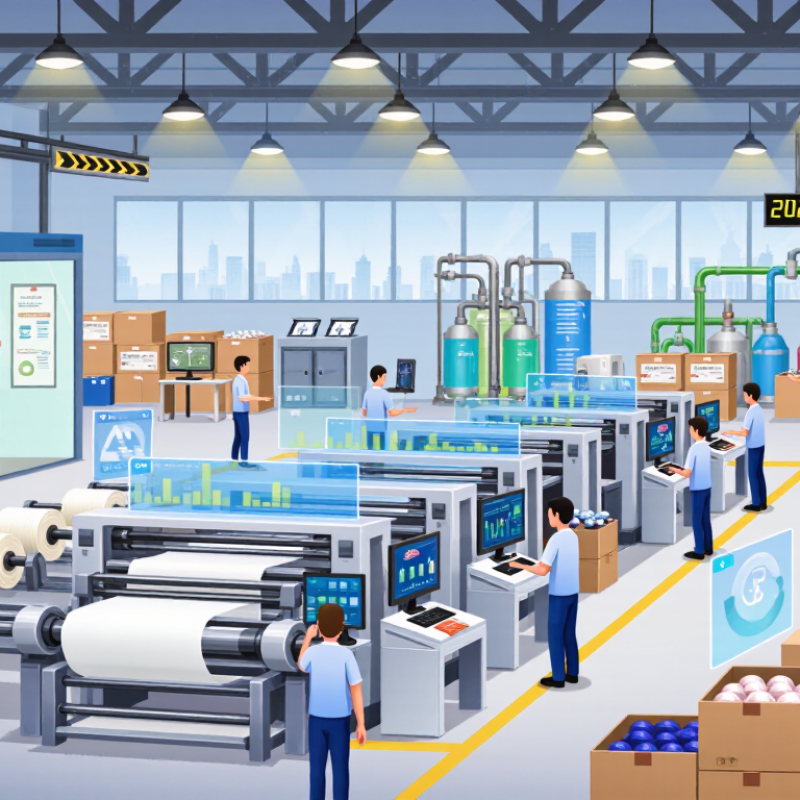
What are the best textile industry trends for 2026? The answer is not one miracle fabric or machine. It is a set of practical shifts in how textiles are designed, made, tracked, and reused. On factory floors, digital monitoring can help teams spot energy waste, production delays, and quality problems sooner. AI tools may support forecasting and design, but they still need reliable data and human judgment. Technology alone is not a strategy.
Materials and circularity will remain central. Brands and manufacturers are exploring recycled fibers, lower-impact dyeing, repair, and take-back programs. Yet recycled content does not automatically mean a product is better; fiber blends can make sorting and recycling difficult. Details matter. Traceability is gaining importance, too, as buyers seek clearer information about fiber origins, processing, and suppliers. Some systems are still uneven, and the data can be incomplete.
This overview examines the trends shaping the textile industry in 2026, including smart manufacturing, material innovation, supply-chain visibility, and changing customer expectations. It also considers the trade-offs behind each trend, from investment costs to worker training and end-of-life design. Not every promising pilot will scale. That is worth remembering. The most useful direction may vary by region, product type, and production capacity. Rather than treating forecasts as guarantees, readers can use these themes to assess opportunities, ask better questions, and make decisions grounded in their own operations.
Global Fiber Output Reached 124 Million Tonnes in 2023 (Textile Exchange)
What Are the Best Textile Industry Trends for 2026?
Global fiber production reached 124 million tonnes in 2023, according to Textile Exchange. That figure shows the scale of the material challenge facing the textile industry. It is a snapshot, not a forecast for 2026. Still, mills and product teams can use it to ask better questions: which fibers are growing, what feedstocks are used, and how much material ends up as waste? A large total alone does not reveal environmental performance. Fiber type, processing, durability, and end-of-life options matter too. The numbers need context.
Tips: When reviewing a supplier’s figures, check the year, scope, and fiber categories included. Compare like with like. Keep documentation close; a spreadsheet is less glamorous, but often more useful.
For 2026 planning, traceability and resource efficiency are practical priorities. Teams can map fiber inputs, measure cutting waste, and test whether designs last through repeated wear and washing. Small trials help: track fabric yield on one production run before changing a whole collection. Recycled or lower-impact fibers may be suitable, but availability and quality can vary. That part is easy to overlook. Targets should reflect verified data, not hopeful estimates, and be revised when better evidence appears.
Generative AI Could Add $150–275 Billion to Fashion (McKinsey)
McKinsey’s 2023 The State of Fashion report estimates generative AI could add $150 billion to $275 billion in operating profits. That estimate covers apparel, fashion, and luxury over three to five years. It is not guaranteed growth; results depend on adoption, data quality, and redesigned workflows. Textile mills might use AI to forecast yarn demand, draft product descriptions, or flag defects in inspection images. A team could compare fabric colorways before ordering thousands of meters. Small steps matter.
The BoF-McKinsey State of Fashion 2024 report found that 73 percent of surveyed fashion executives expected generative AI to be a business priority in 2024. Textile teams still need to test outputs against fiber blends, shrinkage, dye-lot variation, and machine limits. A pattern can look convincing on screen and fail at the loom. Not automatic. Start with a narrow pilot, measure sampling time and material waste, then check results across seasons. One uncomfortable caveat: faster content creation is easier to measure than better fabric performance, so teams may celebrate the wrong number.
Recycled Fibers Made Up 7.9% of 2023 Output (Textile Exchange)
Textile Exchange reported that recycled fibers made up 7.9% of global fiber production in 2023. The figure is a useful baseline for 2026 planning, not proof that most garments are recycled. It describes fiber output, while the share in a particular fabric or product may differ. That distinction matters.
For mills and designers, the next step is to check what the number means in practice. Ask suppliers for fiber composition, recycled-content records, and information about how materials are traced through production. A recycled polyester yarn, for example, may suit a lightweight lining, while a durable workwear fabric can require different strength and testing. Small details count. Color consistency, fiber length, and wear performance can affect whether recycled inputs work at scale. But the gap remains.
More recycled content alone is not a complete measure of progress. Some blends are difficult to separate at the end of use, and supply data can vary in quality. By 2026, stronger reporting and designs that keep materials identifiable may help buyers compare options more reliably. The 7.9% figure also leaves room for reflection: growth is visible, yet recycled fibers still represent a limited share of total production. We should avoid treating a promising percentage as a finished solution.
Fashion Accounts for 2–8% of Global Emissions (UNEP)
What Are the Best Textile Industry Trends for 2026?
Fashion Accounts for 2–8% of Global Emissions (UNEP)
UNEP estimates that fashion contributes roughly 2–8% of global greenhouse gas emissions. That wide range matters: industry estimates depend on what is counted, from fiber production to shipping and disposal. Still, the scale makes emissions a practical priority for textile makers in 2026. Measuring energy use and material inputs can reveal where improvements are possible, rather than relying on vague sustainability claims.
Expect more attention to lower-impact fibers, renewable energy, and longer-lasting fabrics. A mill might track electricity use per kilogram of cloth, while a designer tests whether a lighter weave still survives repeated washing. Recycled fibers can help reduce demand for virgin materials, but they are not automatically the best choice in every product. Performance, durability, and credible sourcing data matter too. The details are messy. Better reporting is still uneven, and some comparisons remain difficult.
Tips: Ask suppliers for clear emissions data and its boundaries. Check fabric samples after washing, not just on the cutting table. Favor materials that meet real product needs and stay useful longer. One awkward truth: a promising material may not work well in every garment.
What Are the Best Textile Industry Trends for 2026? — Fashion Accounts for 2–8% of Global Emissions (UNEP)
| Trend |
Evidence and data |
Why it matters for 2026 |
Source |
| Lower-carbon textile production |
The fashion industry is estimated to generate 2–8% of global greenhouse-gas emissions. The range reflects differences in measurement methods and industry boundaries. |
Measure emissions across materials, manufacturing, transport, and product use. Prioritize energy efficiency and lower-emission production processes. |
UN Environment Programme (UNEP) |
| More responsible fiber sourcing |
Global fiber production reached 124 million tonnes in 2023, according to the latest edition of Textile Exchange’s materials report. |
Growing material volumes make fiber choice, traceability, and verified environmental performance increasingly important across supply chains. |
Textile Exchange, Materials Market Report 2024 |
| Design for circularity and textile-to-textile recycling |
A 2017 analysis estimated that less than 1% of material used to produce clothing was recycled into new clothing. |
Designing garments for durability, repair, sorting, and fiber recovery can help address the gap between textile waste and recycling capacity. |
Ellen MacArthur Foundation, A New Textiles Economy |
| Waste prevention and reuse |
UNEP reports that an estimated 92 million tonnes of textile waste are produced globally each year. |
Longer product life, repair, reuse, and better collection systems are practical ways to reduce the amount of textile material discarded. |
UNEP, Sustainable Fashion |
| Reducing microfiber pollution |
A 2017 IUCN estimate attributed 35% of primary microplastics entering the ocean to washing synthetic textiles. |
Fiber-shedding performance, fabric construction, and appropriate washing and filtration measures are relevant considerations for synthetic textiles. |
International Union for Conservation of Nature (IUCN) |
| Textile collection and regulatory readiness |
EU member states have been required to arrange separate collection of textiles since 1 January 2025 under the Waste Framework Directive. |
Businesses serving European markets should prepare for stronger collection, sorting, and end-of-life management systems as textile rules develop. |
European Commission, Textile Waste |
Figures are published estimates from the cited sources, not forecasts for 2026. Their scope and measurement methods may differ.
The EU’s 2024 ESPR Puts Digital Product Passports on the Textile Agenda
The EU’s Ecodesign for Sustainable Products Regulation (ESPR) entered into force in July 2024, putting Digital Product Passports on the textile industry’s roadmap.
It does not require every textile product to carry a passport immediately. Product-specific rules will define the details. Textiles and apparel are listed as priority products in the European Commission’s 2025–2030 working plan, with requirements still to be developed.
That distinction matters.
The potential scale is large.
Textile Exchange’s Materials Market Report 2024 estimates global fibre production reached 124 million tonnes in 2023. A passport could link product records to fibre composition, manufacturing details, care, repair, and recycling information. For a sorting facility, knowing whether a garment contains a blend of fibres may be more useful than a broad “recyclable” claim.
But a QR code alone proves little.
Supplier records must be accurate, consistent, and updated across complex supply chains. That is hard work. The EU rules have not yet settled every data field or access requirement, so companies should avoid treating early systems as final. The practical question is not just what data to collect, but who can verify it—and keep it usable years later.