7 Best Textile Finishing Processes for Global Buyers?
For global buyers, textile quality is decided long before a finished roll reaches a warehouse. It depends on how fabric feels, performs, absorbs moisture, resists shrinkage, and survives repeated washing. A reliable textile finishing process can transform ordinary cloth into a product suited for sportswear, hotel linens, medical textiles, or premium fashion.
Textile chemist Dr. Thomas Bechtold has emphasized, “Textile finishing is a key factor for the performance and sustainability of textile products.” His observation reflects a practical truth. A soft hand may impress buyers during sampling. It means little if the fabric pills after three washes. Likewise, a water-repellent coating can protect a jacket, but it may reduce breathability or complicate later recycling.
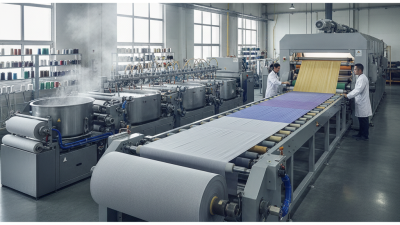
This guide examines seven important finishing processes used across international supply chains. These include softening, calendaring, mercerization, sanforization, raising, coating, and functional finishes. Each process changes the fabric differently. Some improve appearance. Others strengthen performance.
The details matter. A calendar machine can create a smooth, compact surface. A sanforizing unit can control shrinkage before cutting begins. A raising machine can produce the warm, brushed touch expected in winter garments. Buyers should also review chemical inputs, test reports, wash durability, shade consistency, and factory process controls.
There is no universal best finish.
That is easy to forget.
A low-cost finish may satisfy an initial inspection yet fail during real use. Even experienced sourcing teams can misjudge softness, durability, or environmental impact when testing remains too limited. Careful comparison is essential. The following overview helps global buyers connect finishing choices with measurable quality, practical risks, and product expectations.
Textile Finishing Basics: Functions, Fibers, and Production Stages
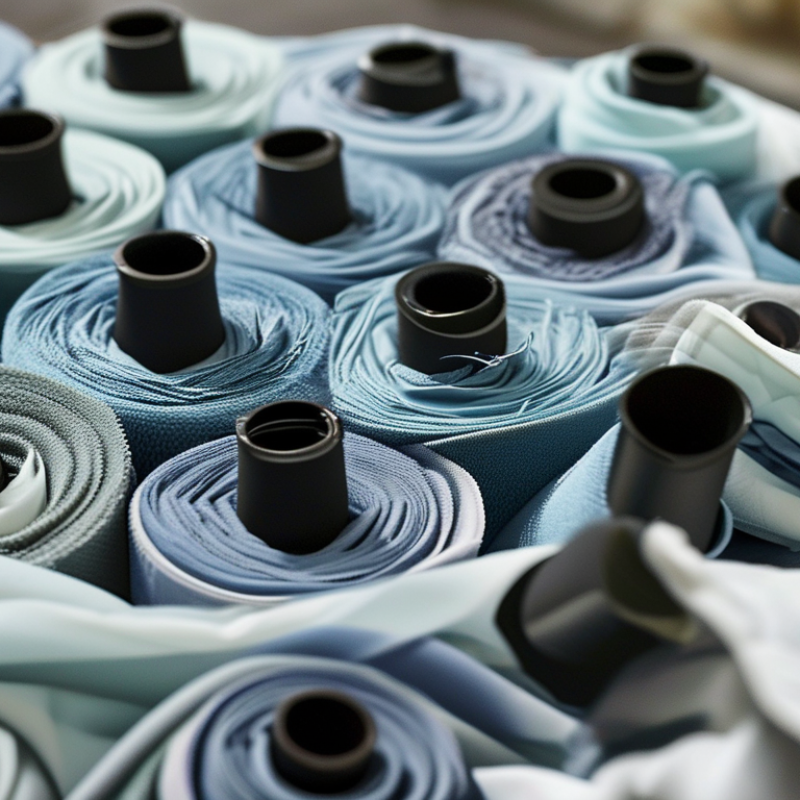
Textile finishing turns fabric from a raw surface into a product with purpose. In production, fabric is prepared, finished, inspected, and packed. Each stage affects hand feel, appearance, performance, and cost. Fiber choice sets the starting point. Cotton may need softening and shrinkage control. Polyester often receives heat setting for dimensional stability. Wool demands careful moisture and temperature control. Blended fabrics can behave unpredictably. This is where experienced technicians matter.
Seven finishing processes cover common buyer requirements: bleaching, dyeing, mercerizing, softening, calendaring, brushing, and coating. Bleaching improves whiteness before dyeing. Mercerizing can increase cotton luster and dye response. Calendaring compresses the surface for a smoother look. Brushing raises fibers and creates warmth. Coating adds selected functions, such as water resistance. Softening improves touch, but excessive treatment may reduce absorbency. Every benefit has a trade-off.
A reliable workflow begins with lab trials and a clear technical specification. Check fabric weight, width, shade, shrinkage, pilling, colorfastness, and surface defects. Test after washing, not only before shipment. Small rolls can hide uneven pressure or edge distortion. In practical production reviews, attractive samples sometimes fail after repeated laundering. That result is frustrating, but useful. It shows why approval should include realistic end-use testing. Buyers should confirm fiber content, finish durability, restricted-chemical compliance, and care-label requirements with qualified laboratories. No finish is universally best. The correct choice depends on fiber, use, washing conditions, and expected service life.
Mechanical Finishing: Calendaring, Brushing, and Sanforizing
Mechanical finishing deserves close attention from global textile buyers. Textile Exchange’s Materials Market Report 2024 estimates that global fiber production reached 124 million tonnes in 2023. It may reach 160 million tonnes by 2030. More fabric means more finishing decisions. Calendaring passes fabric between heated rollers. It can create smoothness, controlled luster, and a cleaner surface. Excessive pressure may flatten texture and reduce air permeability. Brushing lifts surface fibers with rotating cylinders. The result feels warmer and softer. However, loose fibers can increase pilling risk. A glossy sample can mislead.
Sanforizing applies controlled compressive shrinkage, mainly to cotton woven fabrics. It helps limit dimensional change after laundering. Buyers should request residual-shrinkage results, fabric width, GSM, skew, and recovery data. ISO 6330 laundering procedures can support consistent testing across suppliers. In practical sourcing, approval should compare finished fabric with washed fabric. Small differences matter. A sleeve can twist. A hem can shorten.
The ITMF Global Textile Industry Survey continues to show pressure from volatile costs and uncertain demand. That makes process control more important than attractive sampling alone. Buyers should define roller temperature, pressure, brushing intensity, and sanforizing targets before bulk production. These settings are not interchangeable. A soft hand may hide weak abrasion resistance. A stable width may come with reduced stretch. I would also question any claim based on one laboratory swatch. Real production contains variation. That part is easy to underestimate.
7 Best Textile Finishing Processes for Global Buyers
Mechanical Finishing: Calendaring, Brushing, and Sanforizing
Indicative residual-shrinkage levels for cotton woven fabrics after finishing. Sanforizing is designed to control compressive shrinkage and commonly targets residual shrinkage of about 1% or less, while calendaring and brushing primarily modify surface appearance and handle rather than dimensional stability. Actual results vary with fiber content, fabric construction, moisture, and processing conditions.
Chemical Finishing: Softening and Mercerization for Better Fabric Performance
Chemical finishing can turn an ordinary fabric into a more reliable product. For global buyers, softening and mercerization deserve close attention because both affect touch, appearance, strength, and care performance.
Softening uses carefully selected agents to reduce fiber friction. The fabric feels smoother against skin and moves more naturally during sewing. A controlled application can also reduce static and improve drape. However, excessive softener may lower absorbency or create a greasy surface. It may also interfere with printing and coating. Mill trials should check hand feel after washing, not only before shipment. Small samples can be misleading.
Mercerization treats cotton under tension with an alkaline solution. This process can increase luster, dimensional stability, and dye uptake. The fabric often appears cleaner and more even under strong light. Process control matters greatly. Uneven tension may create streaks or inconsistent shrinkage. Residual chemicals must be removed through proper washing and neutralization. Buyers should request test data for tensile strength, colorfastness, pH, shrinkage, and absorbency.
Ask for the finishing recipe’s functional purpose, not just its trade description. Production records can reveal temperature, concentration, dwell time, and fabric speed. These details support repeatability across different lots. Still, laboratory results never replace physical inspection. Touch the fabric, wash it, and inspect the surface closely. Some softness fades quickly. That is worth questioning.
7 Best Textile Finishing Processes for Global Buyers? - Chemical Finishing: Softening and Mercerization for Better Fabric Performance
| No. | Finishing Process | Main Fibers | Typical Chemistry and Conditions | Primary Performance Benefits | Important Trade-Offs | Useful Quality Checks | Best Buyer Applications |
|---|---|---|---|---|---|---|---|
| 1 | Silicone Softening | Cotton, viscose, polyester, polyamide, blends | Amino, hydrophilic, or non-yellowing silicone emulsions; commonly applied by padding at approximately 5–30 g/L, followed by drying and curing according to the formulation. | Very soft hand, smooth surface, improved sewability, reduced friction, and a more luxurious drape. | Excess application may reduce absorbency, cause shade changes, create slippery handling, or affect coating and printing adhesion. | Hand evaluation, absorbency or drop test, shade comparison, friction, yellowing, and wash durability. | Premium apparel, lingerie, home textiles, knitted garments, and soft-touch fabrics. |
| 2 | Fatty-Acid or Cationic Softening | Cellulosic fibers, wool, and blended fabrics | Fatty-acid derivatives or cationic softeners applied in a mildly acidic bath; dosage is commonly selected within approximately 5–30 g/L depending on fabric weight and desired hand. | Cost-effective softness, fuller handle, improved drape, and reduced harshness after scouring or dyeing. | May lower hydrophilicity, create shade or staining risks, and show limited durability after repeated laundering. | Absorbency, pH, whiteness or shade change, hand rating, rewettability, and laundering performance. | Basic cotton garments, towels, bedding, uniforms, and economical fabric programs. |
| 3 | Polyethylene Softening | Cotton, polyester, polycotton, and synthetic blends | Oxidized or nonionic polyethylene emulsions, often applied by padding at approximately 10–40 g/L and dried or cured as specified by the formulation. | Smooth surface, improved sewability, moderate softness, better abrasion behavior, and a clean handle. | Usually provides less extreme softness than silicone; excessive add-on can reduce absorbency and alter fabric appearance. | Surface smoothness, abrasion resistance, absorbency, shade change, add-on level, and wash durability. | Workwear, shirting, woven cotton, blended fabrics, and applications requiring a smooth but not overly slippery handle. |
| 4 | Hydrophilic Softening | Cotton, viscose, lyocell, polyester, and blends | Hydrophilic silicone or polymer systems designed to preserve or improve wetting; commonly applied by padding at approximately 5–30 g/L. | Soft hand combined with improved wettability, moisture spreading, comfort, and faster rewetting. | May provide less oily or deep-soft effect; compatibility with dyes, optical brighteners, and repellent finishes must be controlled. | Drop test, sinking time, vertical wicking, moisture management, hand, and wash durability. | Sportswear, underwear, towels, baby textiles, and comfort-focused next-to-skin products. |
| 5 | Resin Easy-Care Finishing | Cotton and cotton-rich blends | Crosslinking resins, catalysts, and softeners applied by padding; curing is commonly carried out around 140–170 °C, depending on the chemistry and fabric. | Reduced wrinkling, improved dimensional stability, easier ironing, and better wash-and-wear performance. | Possible strength loss, reduced tear resistance, formaldehyde-management requirements, and a drier hand if over-cured. | Wrinkle recovery angle, tensile and tear strength, dimensional change, residual formaldehyde, and laundering durability. | Shirts, uniforms, trousers, household linens, and fabrics requiring easy-care performance. |
| 6 | Mercerization | Primarily cotton yarns, woven fabrics, and knitted fabrics | Treatment with concentrated sodium hydroxide, commonly about 18–30% w/w, with controlled tension, followed by thorough washing and neutralization. | Higher luster, improved dye affinity, better dimensional stability, increased strength potential, and a smoother surface. | Requires caustic-resistant equipment, careful tension control, substantial washing, wastewater treatment, and strict process safety. | Luster, barium activity or alkali absorbency, dye uptake, tensile strength, shrinkage, width, and residual alkalinity. | Premium cotton shirting, fine bed linen, high-quality knitwear, sewing thread, and lustrous fabrics. |
| 7 | Liquid-Ammonia Finishing | Cotton and selected cellulosic fabrics | Treatment with liquid ammonia under controlled industrial conditions, followed by ammonia removal and fabric stabilization; the process requires specialized recovery equipment. | Improved softness, smoothness, dimensional stability, crease recovery, and strength retention compared with some conventional crosslinking routes. | High capital investment, complex ammonia handling and recovery, limited availability, and demanding process control. | Handle, dimensional change, crease recovery, tensile and tear strength, surface appearance, and residual ammonia control. | High-performance cotton apparel, premium trousers, technical shirting, and quality-sensitive export programs. |
Protective Finishing: Water-Repellent and Flame-Retardant Treatments
Protective finishing gives textile products practical value beyond color and softness. Water-repellent treatment makes droplets bead on the surface instead of soaking in immediately. It does not make fabric fully waterproof. A tightly woven work jacket may shed light rain, while seams and zippers still allow water inside. Buyers should request spray tests, hydrostatic pressure data, and laundering results before approving production.
Flame-retardant treatment helps slow ignition and reduce flame spread. Its performance depends on fiber type, fabric weight, construction, and chemical application. A lightweight curtain and a heavy industrial cover cannot use the same finishing plan. Reliable suppliers should provide test reports from competent laboratories, batch records, and clear care instructions. Small details matter. Check fabric samples after repeated washing, not only before delivery.
Water repellency can weaken through abrasion, detergent, and heat. Flame-retardant performance may also change after washing or chemical exposure. Production reviews often reveal a useful warning: a finish that looks excellent after one wash may disappoint after ten. I would also inspect hand feel, breathability, odor, and color change. Strong protection is not enough if the fabric becomes stiff or uncomfortable. Some specifications remain incomplete until the end use is clearly defined. That gap deserves attention before bulk manufacturing.
Global Buyer Checklist: Quality Testing, Certifications, Cost, and Sourcing
Global buyers should assess textile finishing as a controlled quality system, not merely a surface treatment.
Common options include softening, mercerizing, sanforizing, calendering, raising, wrinkle resistance, and water-repellent finishing. Each process changes handle, shrinkage, appearance, or performance.
Textile Exchange’s 2024 Materials Market Report recorded global fiber production at 124 million tonnes in 2023. This scale makes traceability and repeatable finishing increasingly important.
Request laboratory evidence before approving a supplier.
Check colorfastness under ISO 105, dimensional stability under ISO 5077, pilling under ISO 12945, and abrasion under ISO 12947. Test formaldehyde when chemical finishes are applied.
Certification documents should match the exact fabric, production site, and shipment period. A certificate alone is not proof of consistent quality.
Ask for recent test reports, process records, and random pre-shipment samples.
Cost comparisons must include reprocessing, inspection, freight delays, and rejected goods. A cheaper quote may be a false saving.
For recycled or organic claims, verify chain-of-custody records through recognized certification systems.
In practical sourcing reviews, buyers often focus too heavily on fabric price. That is a mistake.
I would also question whether a durable water-repellent finish is necessary for the product’s real use. More finishing is not always better.
Small laboratory differences can become visible after washing, especially around seams and hems.
Related Posts
-
Why the Textile Finishing Process is Essential for High Quality Fabrics
-
How to Choose the Right Textile Finishing Process in 2026?
-
What is Textile Finishing and Why is it Important for Fabrics?
-
Top 5 Textile Finishing Techniques You Need to Know?
-
Top 10 Tips for Understanding the Dyeing and Finishing Process?
-
2025 How to Master the Textile Finishing Process for Optimal Results