
2026 Best Waist Trainer Factory for Global Buyers?

Choosing a Waist Trainer Factory in 2026 takes more than comparing catalog photos or unit prices. Global buyers need to assess construction, sizing consistency, materials, production capacity, and communication before placing an order. A well-made sample should have even stitching, secure closures, and clear labeling. Details matter.

This guide outlines practical ways to evaluate suppliers, from requesting product specifications to checking sample quality and confirming lead times. Ask how the factory handles size grading, quality inspections, packaging, and repeat orders. Request relevant business and product documentation, then verify it independently where possible. Do not treat a polished website as proof of manufacturing capability. A factory visit or a trusted third-party inspection may offer useful evidence, but neither replaces clear written specifications.

Costs deserve careful reading. Minimum order quantities, sample charges, customization fees, and shipping terms can change the real landed cost. Fit varies. Waist trainers are apparel products, and sizing or comfort can differ between users, so avoid unsupported claims about health outcomes. A supplier that answers specific questions clearly is often easier to work with than one offering vague promises. Still, no shortlist is perfect; a strong sample cannot guarantee every production run will match. Use this overview to compare options with realistic expectations and identify a Waist Trainer Factory suited to your market, order size, and quality requirements.
2026 Best Waist Trainer Factory for Global Buyers?

What Defines a Waist Trainer Factory in the 2026 Global Market?

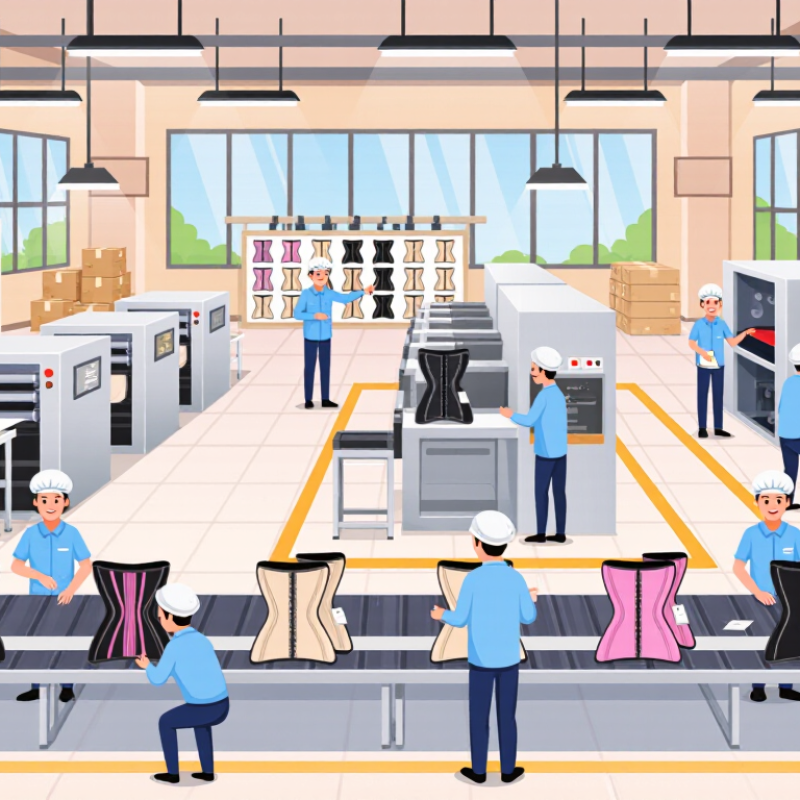
In the 2026 global market, a waist trainer factory is more than a sewing floor. It must turn a buyer’s specifications into consistent compression panels, secure seams, and reliable size grading. Ask for fabric composition records, stretch-and-recovery test results, production tolerances, and inspection samples from actual batches. Details matter. A zipper that ripples after washing or a waistband that rolls while sitting can reveal weak pattern development. These checks assess construction and consistency, not medical performance.

Global readiness also means managing lead times, material sourcing, and shipment planning transparently. The WTO’s April 2024 Global Trade Outlook and Statistics projected merchandise trade volume growth of 2.6% in 2024 and 3.3% in 2025. Those figures describe trade broadly, not waist trainer demand, and are forecasts rather than guarantees. Buyers should therefore verify a factory’s available capacity and request dated test records instead of relying on catalog claims. A polished sample helps, but it does not prove every production run will match. That gap deserves scrutiny.

Key Criteria for Evaluating Waist Trainer Manufacturers

A dependable waist trainer manufacturer should be able to explain how each style is made, not just show polished product photos. Ask about fabric composition, stretch recovery, seam construction, hook-and-eye spacing, and reinforcement around high-tension areas. Request a sample in more than one size. Check whether the fabric feels consistent and whether closures stay aligned after repeated fastening. Small details matter.

Sizing deserves careful review. Compare the factory’s measurement chart with a sample you can measure yourself, and ask how grading changes between sizes. A clear quality-control process should cover incoming materials, stitching, measurements, and finished-garment inspection. Request relevant test reports and product documentation for your intended sales markets; verify their scope and dates rather than relying on a verbal assurance. Good records help. They do not replace inspection.

Production capability is more than a large monthly output figure. Ask about minimum order quantities, sample lead times, repeat-order consistency, packaging options, and how defects are handled. Communication is part of the evaluation: precise answers and realistic timelines are more useful than confident promises. A factory may perform well on a first order and still struggle with a larger repeat run. I would not treat one successful sample as proof. Keep written specifications, inspect production samples, and leave room for a few surprises.

Materials, Production Processes, and Quality Control

Material selection shapes comfort, durability, and fit. Ask factories for fiber composition, fabric weight, stretch recovery, and test records, not just a swatch. Textile Exchange’s Materials Market Report 2024 estimated global fiber production at 124 million tonnes in 2023. This sector-wide figure highlights the scale of material sourcing, but it does not verify any individual supplier’s claims. Request traceable specifications for outer fabric, lining, elastic, and boning.

Production consistency depends on repeatable steps. Cutting should follow approved patterns, while operators should check seam allowance, panel alignment, and stitch tension. For waist trainers with boning channels, inspect whether each channel is straight and securely sewn. Ask for a pre-production sample and compare it with bulk units. Small details matter. Yet a sample alone cannot prove that every shipment will match.

Quality control should cover incoming materials, in-line checks, and finished goods. Factories can document measurements, seam strength, color variation, and closure function against agreed tolerances. ISO 2859-1:2021 describes sampling procedures for inspection by attributes; buyers can use it to structure acceptance checks. Request dated inspection records and clarify how defects are classified. A checklist helps, but it can miss problems if measurements or sampling are poorly chosen. Review the process, not only the certificate.

Certifications, Compliance, and International Shipping

Choosing a waist trainer factory for global orders means checking paperwork as carefully as stitching. Ask for current certificates, their scope, issuing body, and expiry date; a logo on a brochure is not enough. Request material composition details, relevant test reports, and batch inspection records. Keep a production sample beside the approved specification sheet. Small differences matter.

Compliance depends on the destination and product details. Confirm labeling, fiber-content declarations, packaging rules, and import documents with a qualified local adviser or customs broker. Do not assume one certificate covers every market. A dependable factory should explain which documents it can provide and where its responsibility ends. That boundary matters. For shipping, confirm carton dimensions, packing lists, commercial invoices, estimated dispatch dates, and agreed delivery terms before production begins. Freight delays happen, and estimates can change. Even experienced buyers sometimes overlook how a small change in packaging affects freight cost.

Tips: Request a sample document pack before placing a large order. Check that company names, product descriptions, and quantities match across the paperwork. Ask who handles customs questions. Recheck the details before shipment.

How Global Buyers Can Select and Verify a Factory

2026 Best Waist Trainer Factory for Global Buyers?
How Global Buyers Can Select and Verify a Factory

A polished sample is only a starting point. Ask the factory to show its production floor, current capacity, and records for fabric sourcing. For waist trainers, check stretch recovery, seam strength, size grading, and whether boning stays in place after washing. Request a pre-production sample made with the same materials and construction as the bulk order. Then compare measurements against your approved specification. Small differences matter.

ISO’s 2022 Survey counted more than 1.2 million ISO 9001 certificates worldwide. This shows how widely quality-management systems are used; it does not prove that a particular factory makes reliable products. Verify the certificate’s scope, issuing body, and validity directly. Review recent inspection records, test reports, and corrective actions. Ask who performed each test and which product lot it covered. A tidy audit file can still miss problems on the sewing line.

Tips: Use a short trial order before scaling up. Keep dated samples, measurement sheets, and written approval records. Check whether the factory can trace materials by lot and explain how it handles rejected pieces. If an answer feels vague, ask for a photo, record, or repeat test. I would not rely on one visit alone; production conditions can change between visits.

2026 Best Waist Trainer Factory for Global Buyers? - How Global Buyers Can Select and Verify a Factory

Selection Dimension What to Verify Evidence to Request Practical Buyer Check
Product and construction capability Experience with the intended waist-trainer construction, including fabric, boning or support panels, closures, stitching, and size range. Current product specifications, material details, production samples, and examples of comparable construction. Compare the sample with the specification. Check fit, seam strength, closure function, comfort, and consistency across sizes.
Material traceability Whether the factory can identify material types, suppliers, and relevant production batches. Material declarations, purchase or batch records where available, and test reports tied to the applicable material or product. Confirm that documentation describes the materials actually used in the sample and proposed production order.
Quality-control process How incoming materials, in-process work, finished products, and defects are inspected and recorded. Inspection procedures, defect classifications, sample inspection records, and corrective-action examples with confidential details removed if necessary. Agree on written product tolerances, defect definitions, inspection timing, and acceptance criteria before production.
Product testing and safety Whether testing matches the product materials, intended market, and applicable buyer requirements. Recent reports from a qualified testing provider, with product description, test scope, date, and tested sample clearly identified. Check that the report is relevant to the offered product; do not treat a certificate or report for a different item as proof of compliance.
Market-specific labeling Ability to support the labeling and documentation requirements of each destination market. Draft labels and packaging artwork for review, including fiber content, care information, and origin details where required. Have the importer or a qualified compliance adviser verify requirements for the destination country before printing or shipment.
Certifications and claims Whether any claimed management-system or product certification is current and covers the relevant site, product, or process. Certificate number, issuing or certification body, scope, covered facility, validity dates, and a way to verify the record with the issuer. Check the certificate directly with the issuer or its official verification service. Do not rely on a logo or an unverified copy alone.
Production capacity and lead time Available capacity for the requested styles and quantities, plus the steps included in the quoted lead time. Written production schedule, order assumptions, capacity information, and a clear distinction between sampling and bulk production. Confirm dates, quantity assumptions, approval milestones, and how delays or material shortages will be communicated.
Minimum order and cost transparency Minimum order quantities by style, color, and size, and the factors that may change the quoted price. Itemized quotation showing product specifications, packaging, sampling charges, payment terms, and any exclusions. Compare quotations only after aligning specifications, order quantities, packaging, shipping terms, and testing scope.
Social and environmental due diligence Whether the factory can explain its workplace policies, subcontracting practices, and relevant environmental controls. Facility details, written policies, audit information where available, and disclosure of subcontracted production steps. Verify the production site and assess whether any audit or policy evidence is current, relevant, and independently checkable.
Communication and order accountability Who manages sampling, approvals, production updates, quality issues, and post-shipment claims. Named role contacts, written approval records, order terms, and a documented process for handling nonconforming goods. Record specifications and decisions in writing; confirm who is responsible for each approval and corrective action.

Note: This table is a due-diligence framework, not a ranking or certification of individual factories. Set acceptance thresholds according to your product specification, destination market, order size, and risk assessment.

Scroll to Top